Fun space adventures built on real facts. Nubo guesses, Iko tests, and every episode is full of real pictures and video of space and our Earth, each one marked with its source.
In production10 × 12 minFrom easy to harderIn many languages
Scroll to fly out of the window
Why Nubo & Iko
Fun to watch, true to the facts
Fun, built on facts
The series is made to be interesting and funny, and everything it tells about space and the Earth is true. Every episode is full of real pictures, videos and facts.
Made and real side by side
Every real picture and video in the show carries a badge with its source. Everything else is made, so children see made and real pictures next to each other.
Looking real is not being real
Every real picture and video in the series carries a badge, so children always know which one is real.
The series opening
A ride through the Solar System, with real pictures
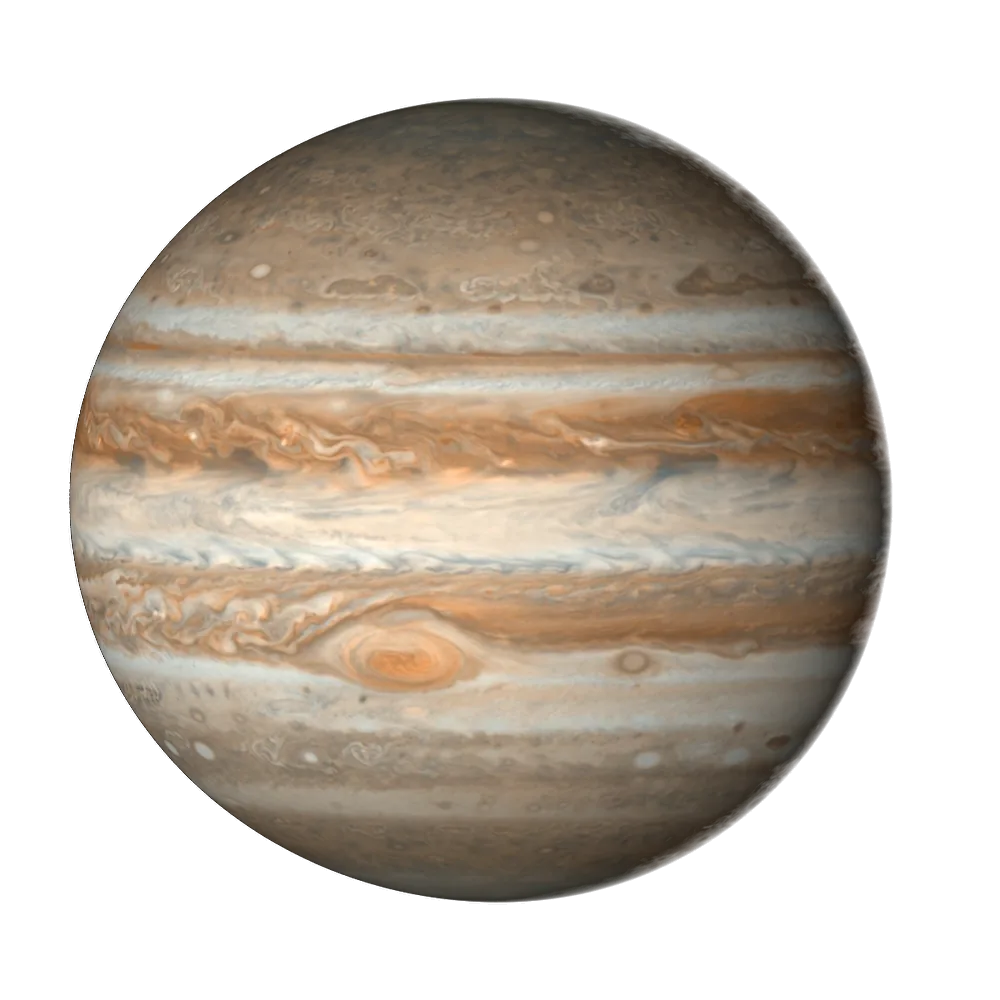
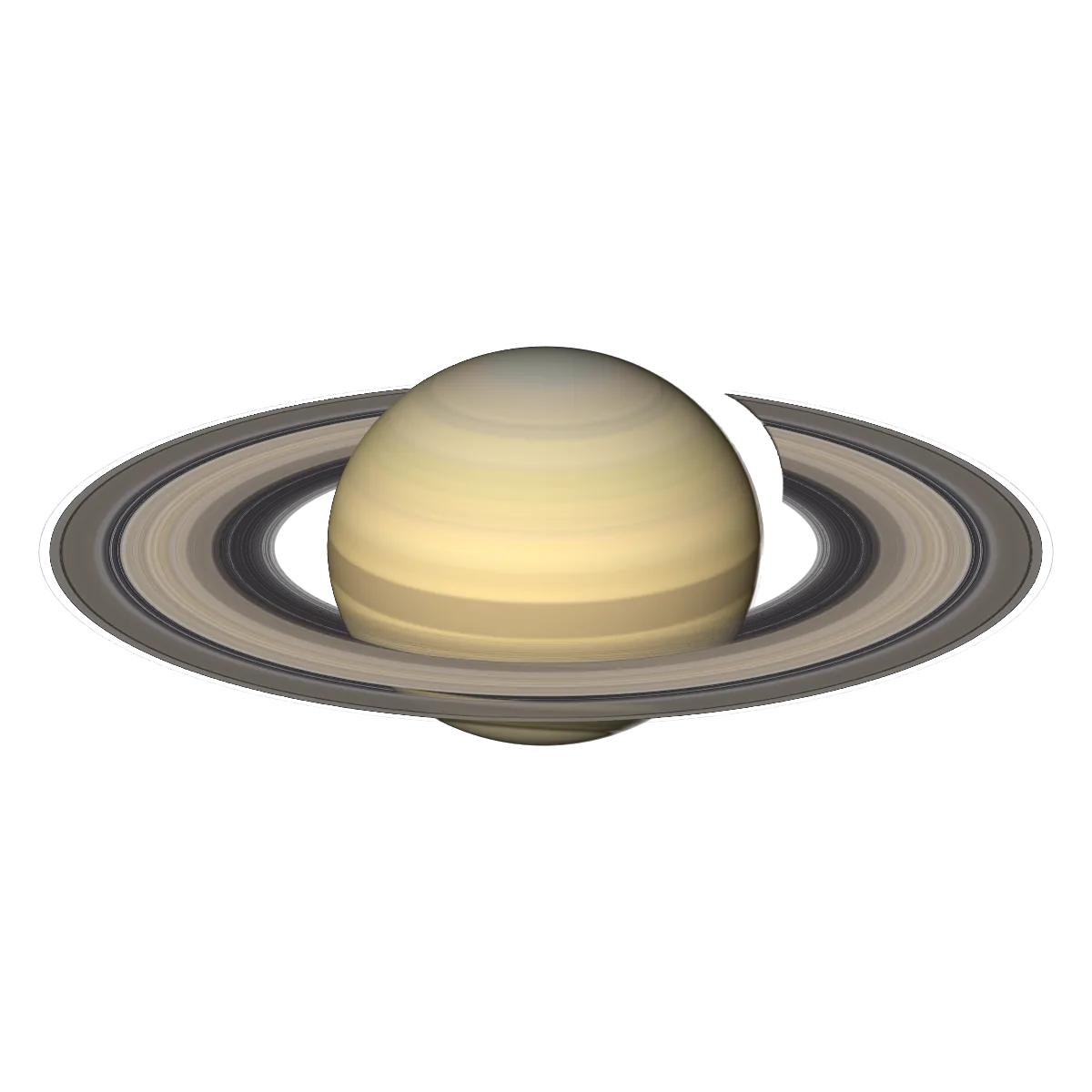
Nubo and Iko fly from the real Sun past the Earth, the Moon, Mars, Jupiter and Saturn, and home through the aurora. The Sun, the Earth, the Moon and the planets are real photos and video from NASA, each with the year it was taken.
The idea
Real facts, a made-up adventure
Nubo & Iko is full of jokes, chases and rescues. The adventure is made up, but it presents real facts about space. In every episode Nubo and Iko explore one place in space and one phenomenon, such as the Earth’s spin, the speed of light, gravity or the silence of space.
Made up
Nubo, Iko and Taffi, the Welcome Station where everyone floats, and the speed of their little ship Cup, which gets anywhere fast.
Even the made-up parts keep to real physics. Things float in orbit for a real reason, and space stays silent.
Real, checked against NASA sources
The speed of light and how long trips really take, gravity, the planets, the spinning Earth that gives us day and night, and every real picture.
Numbers are rounded for children: “about 8 minutes”, “about 19 years”.
Real pictures, always marked
Every episode has lots of real pictures and video from space. Each one carries a “Real picture” badge that says what it shows, when it was taken and who took it.
Next to the made pictures, the badge is how a child knows which one is real.
A message takes minutes
Light from the Sun takes about 8 minutes to reach us, and a radio call is no faster. So in the story nobody chats live with someone near the Sun.
In the seriesCup gets there fast, but from episode 2 on Iko tells the real travel time on every trip. Light from the Sun reaches the Earth in about 8 minutes. A plane flying without a stop would need about 19 years.
Space is silent
Sound needs something to travel through, like air, water or glass. Space is empty, so fireworks outside the window open without a bang.
In the seriesIko knew it all along and says a polite “Boom.” for every explosion.
Floating is falling
The station falls toward the Earth all the time, but it also moves sideways so fast that it keeps missing. Everything inside falls with it, so everything floats.
In the seriesThe Welcome Station is made up, but everyone in it floats for the real reason. Episode 5 explains why.
Without air, a feather falls like a stone
At home the air slows the feather down. On the Moon there is hardly any air, so a feather and a stone dropped together land together.
In the seriesGravity gets its own episode, episode 5, after children have seen things fall and float many times.
Down points to the middle
Gravity pulls everything toward the middle of the Earth. That is why people on the other side of the planet don’t fall off.
In the seriesIn episode 5 Nubo finds out that gravity holds us on the Earth and that the Moon’s pull makes the tides.
The Earth spins
The Sun doesn’t go anywhere at night. The Earth turns round once a day, and night is the side facing away from the Sun.
In the seriesIn episode 1 the shade in the backyard moves because the Earth turns. Episode 4 adds the year: one trip round the Sun.
Every planet is its own world
Mercury is the closest to the Sun and Venus is the hottest. People have sent robots to explore Mars, and Jupiter and Saturn are giants made mostly of gas.
In the seriesIn episode 1 Cup flies past Venus and Mercury on the way to the Sun. Later episodes explore them, and Mars and the giants, properly.
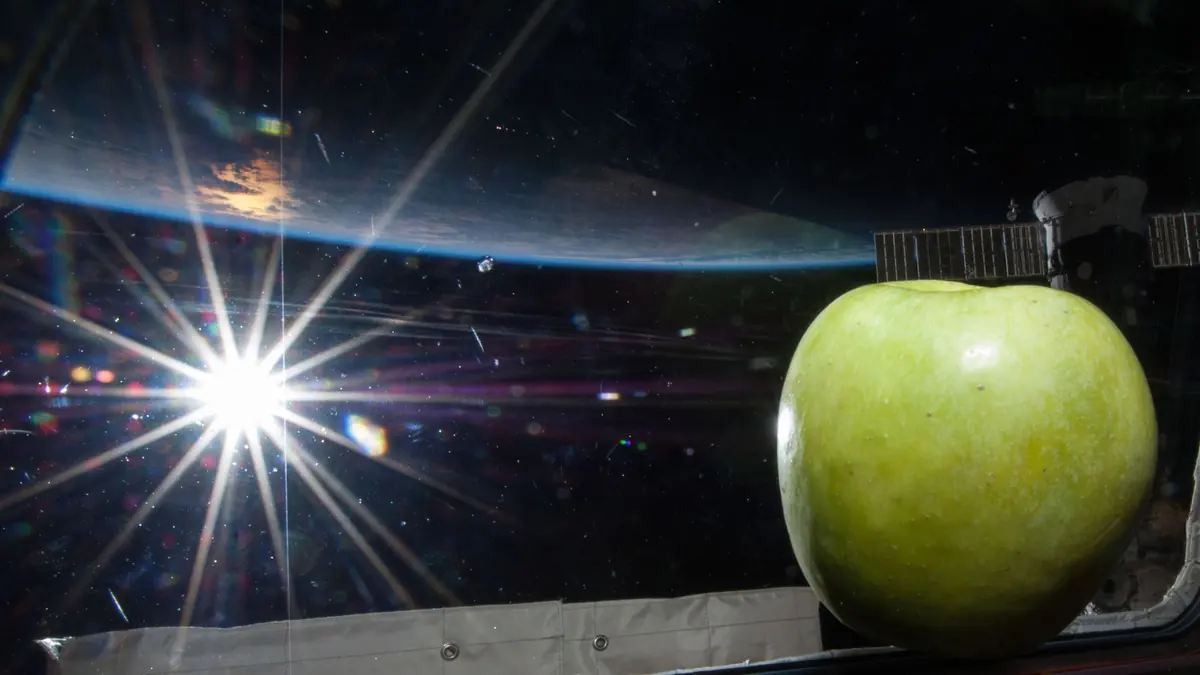
Real photo · NASA · 6 Feb 2014
Real pictures carry a date
Every episode has real photos or video from NASA. Each has a small camera badge and the date it was taken, so children always know which pictures are real. In episode 1 children see the real space station, a real spacewalk, Venus and Mercury from Mariner 10, the Sun from NASA’s SDO and a whole galaxy from Hubble.
In the pictureAn apple floating on the real space station. It falls around the Earth too.
The characters
Friends at the Welcome Station
Nubo guesses, Iko tests, Taffi squeaks. Their home base is a small station in low orbit, and the real space station floats past the window now and then.
NUBO
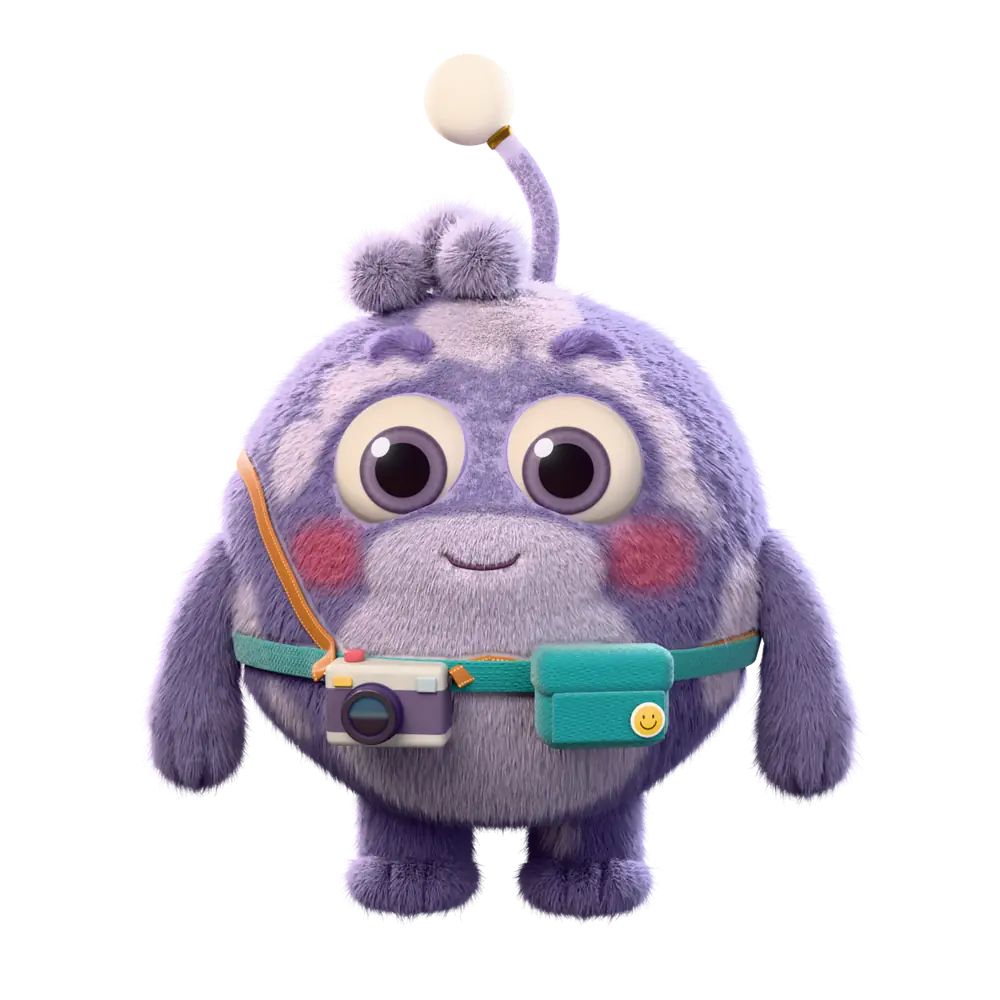
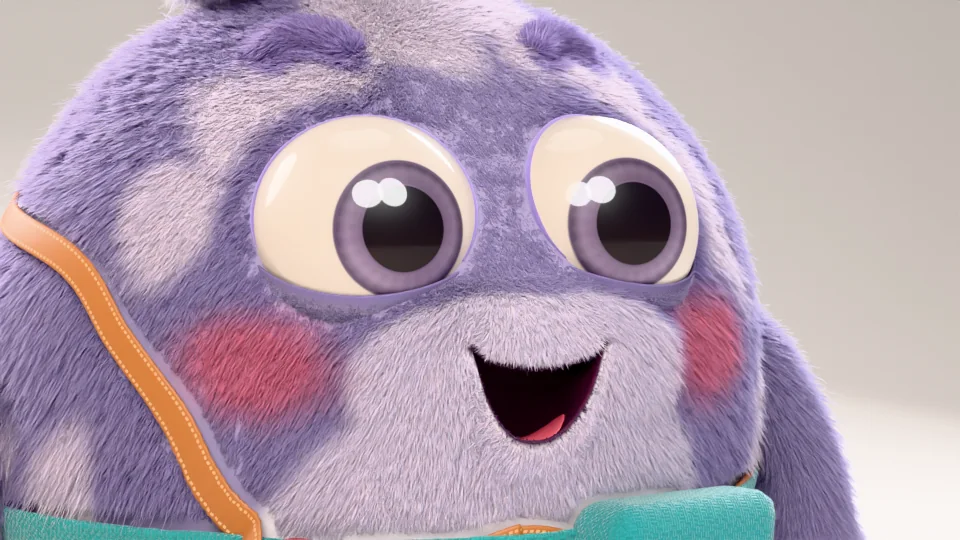
Nubo
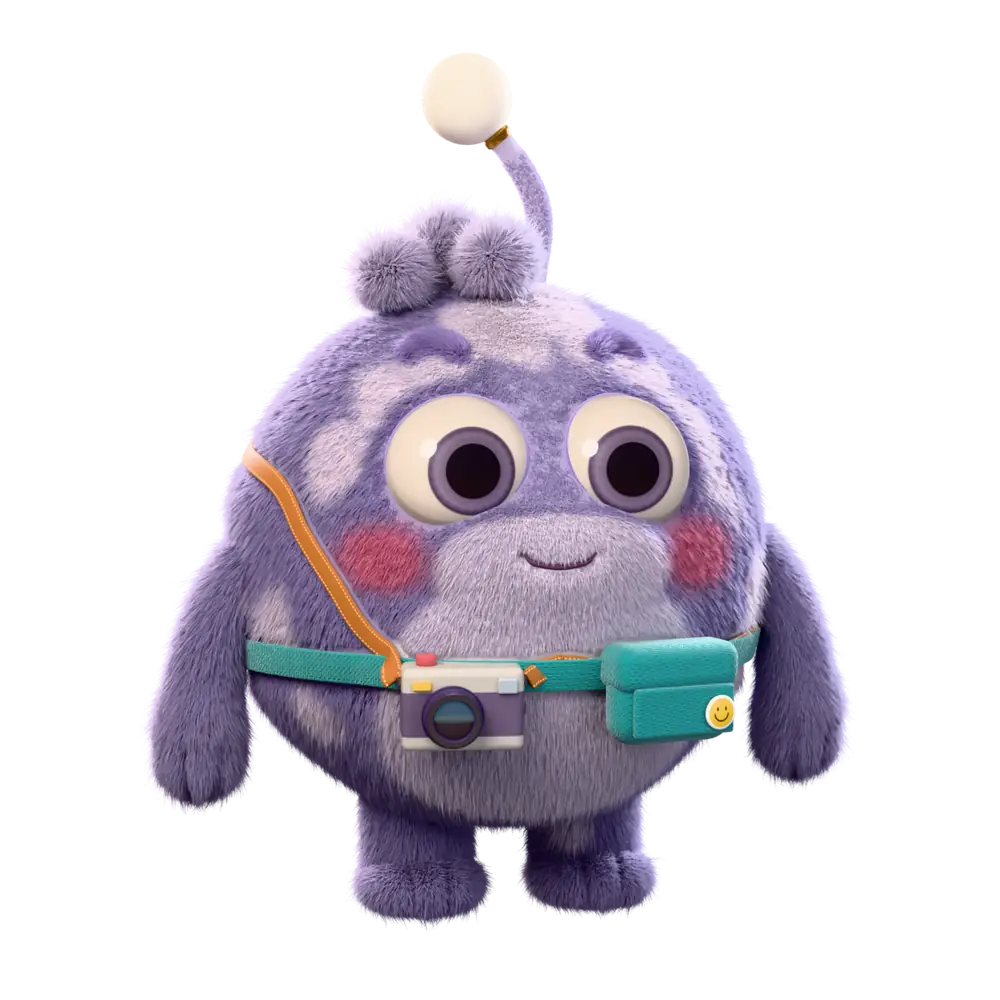
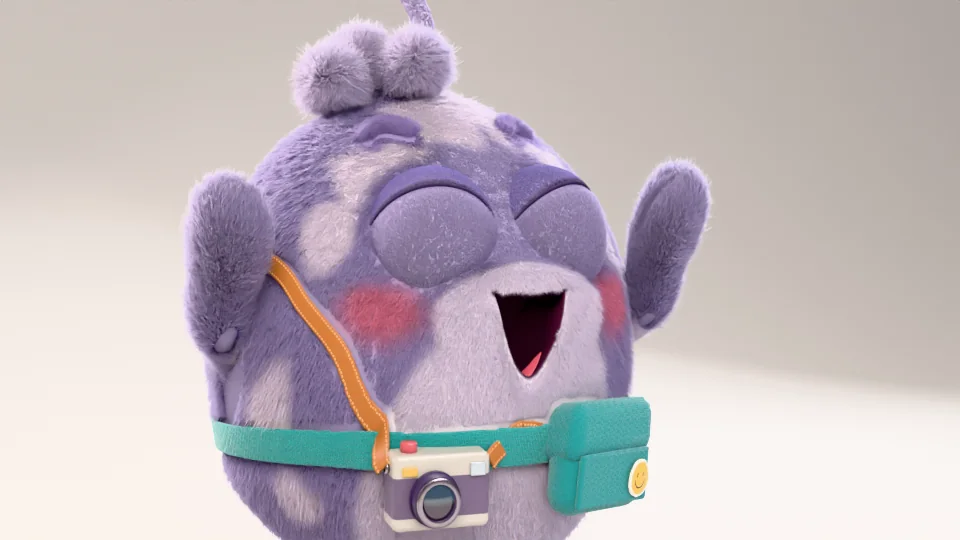
A curious, cloud-soft alien girl from a faraway planet. She travels with her camera and wants a picture of everything for her family at home.
She talks, laughs and guesses first
She guesses boldly and is often wrong, the same way real children are. So the viewer always keeps up with her.
When a guess fails, her antenna dims for a moment. Then she shouts: “Again!”
Antenna light
Keep scrolling down and she turns around
0°
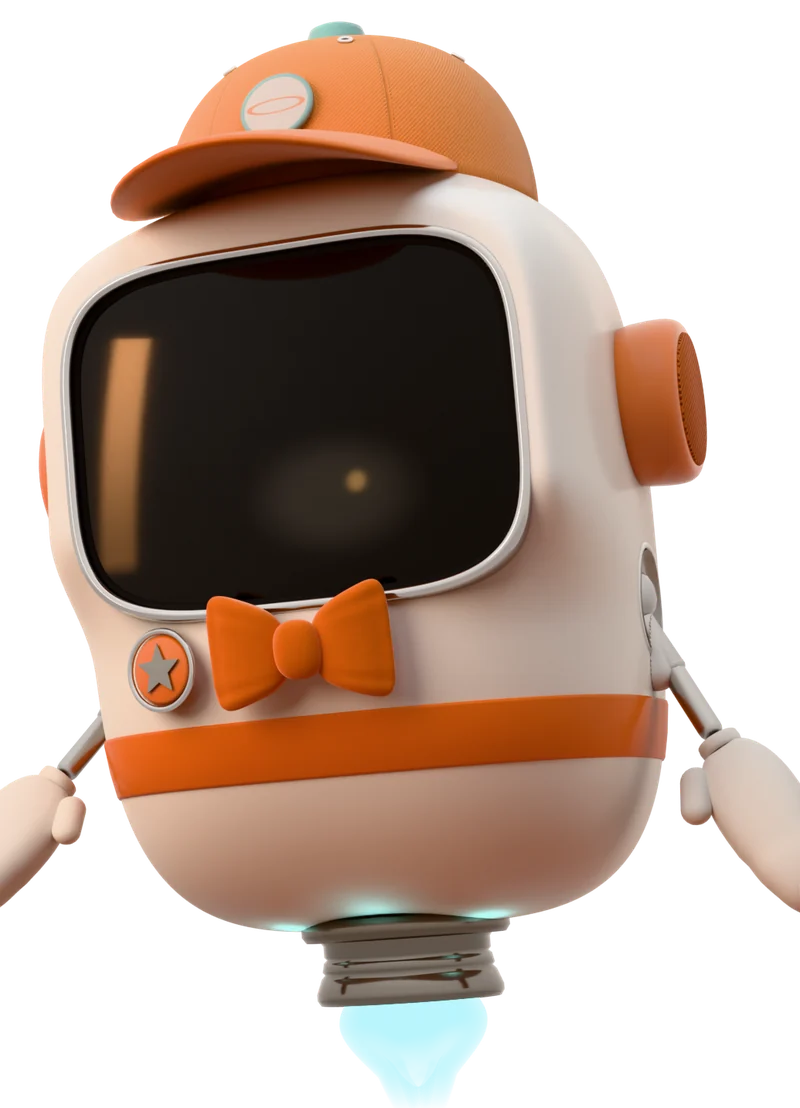
Iko
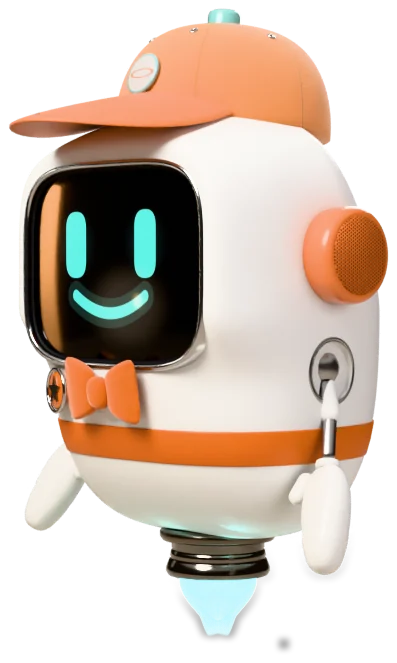
The tour guide robot of the Welcome Station: polite, careful and proud of its job. Iko checks every guess, never with a lecture, always with a test: “Good guess. Let’s test it!”
When Iko gets nervous, it polishes something. Its face is a screen of light, and it is the only one who talks to the viewer.
Gender-neutralSpeaks to the viewer
Move your pointer. Iko is watching.
Taffi
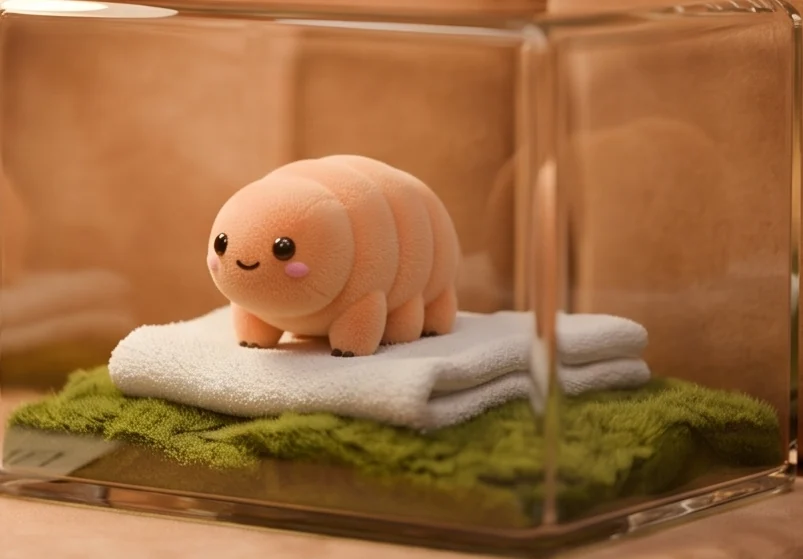
A tardigrade, small and tough like the real ones. Taffi lives in a sealed moss terrarium at the station and comes along in a little travel box.
Taffi never speaks. A squeak and a look are enough.
When something startles Taffi, it curls into a ball, breathes in and out, and comes back out.
Squeaks onlyWorks in every language
squeak
Toby & Mila
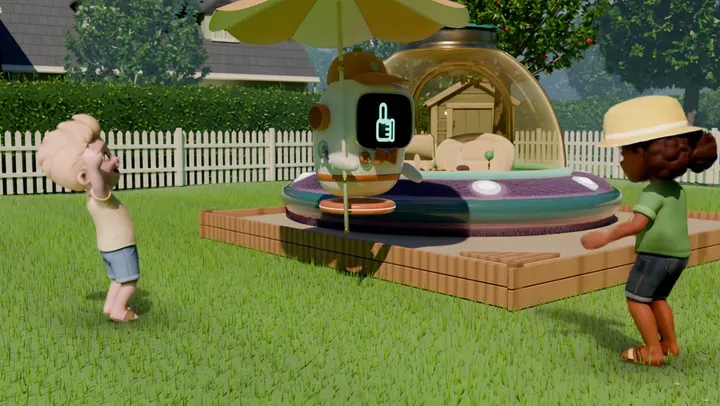
Toby and Mila are friends here on Earth, and they love adventures, space and learning new things.
Ask what the viewer would ask
Live from space
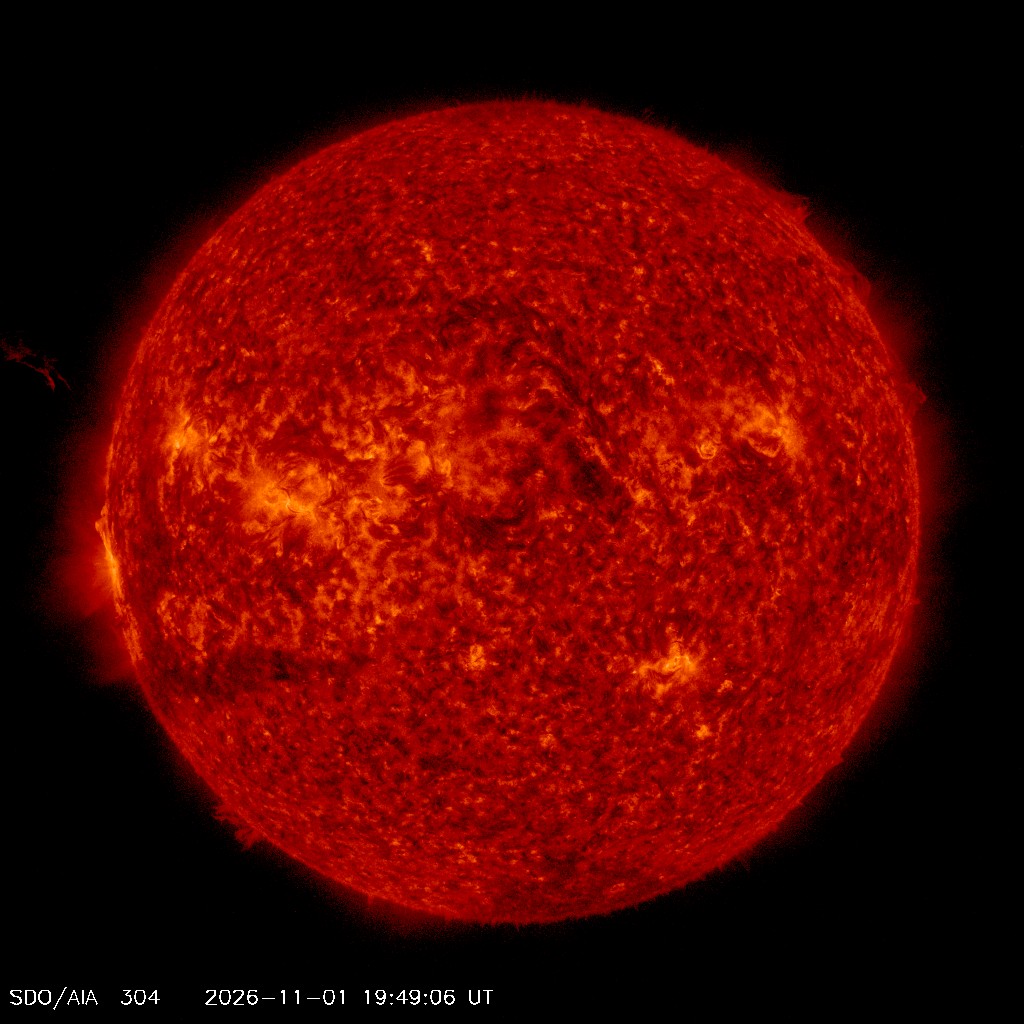
The Sun right now
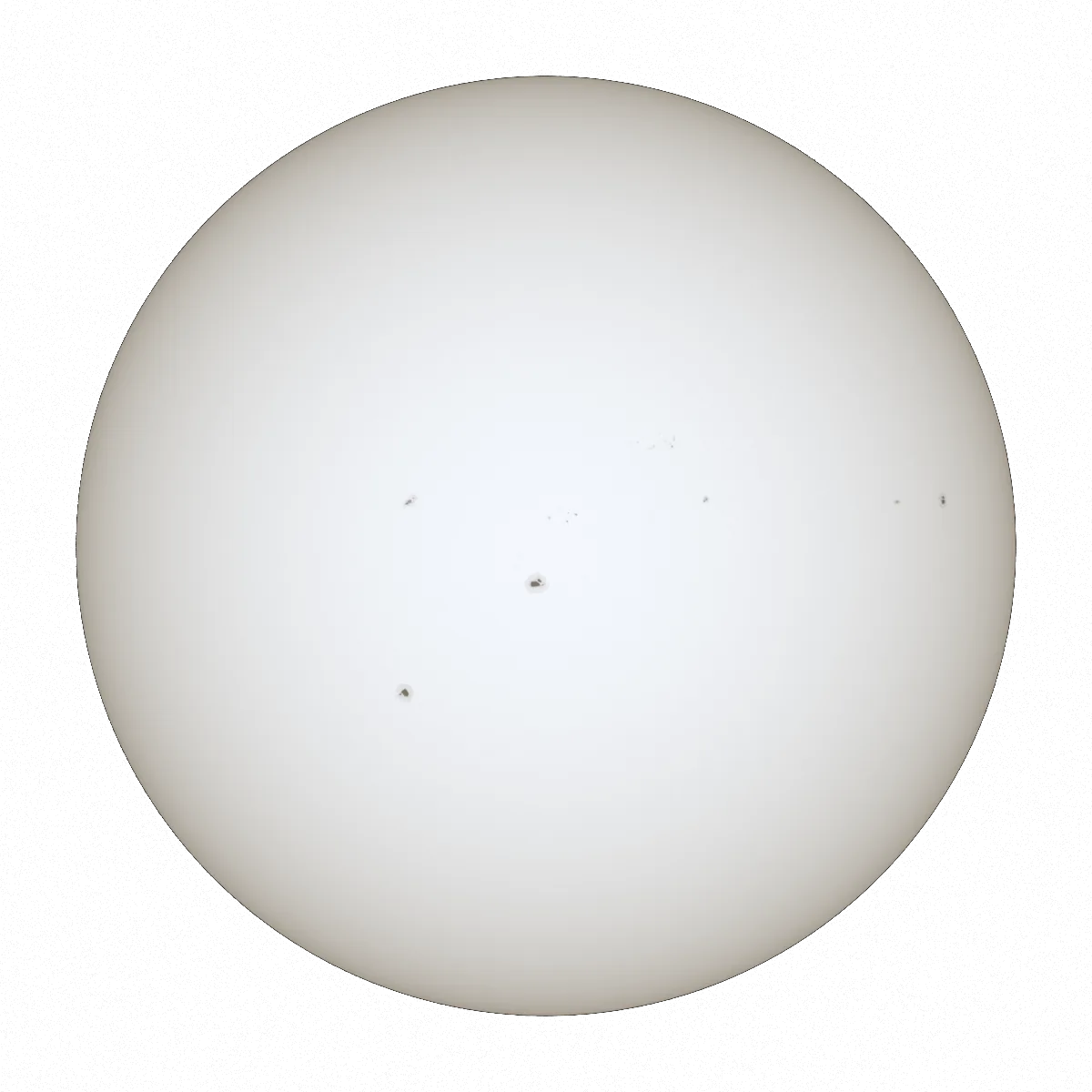
This is a real picture of the Sun, taken by a NASA spacecraft that watches it all day. A new one comes every few minutes. Nubo, Iko and Taffi are watching it from Cup.
Real picture · the Sun · NASA/SDO
CupKuppi in Finnish
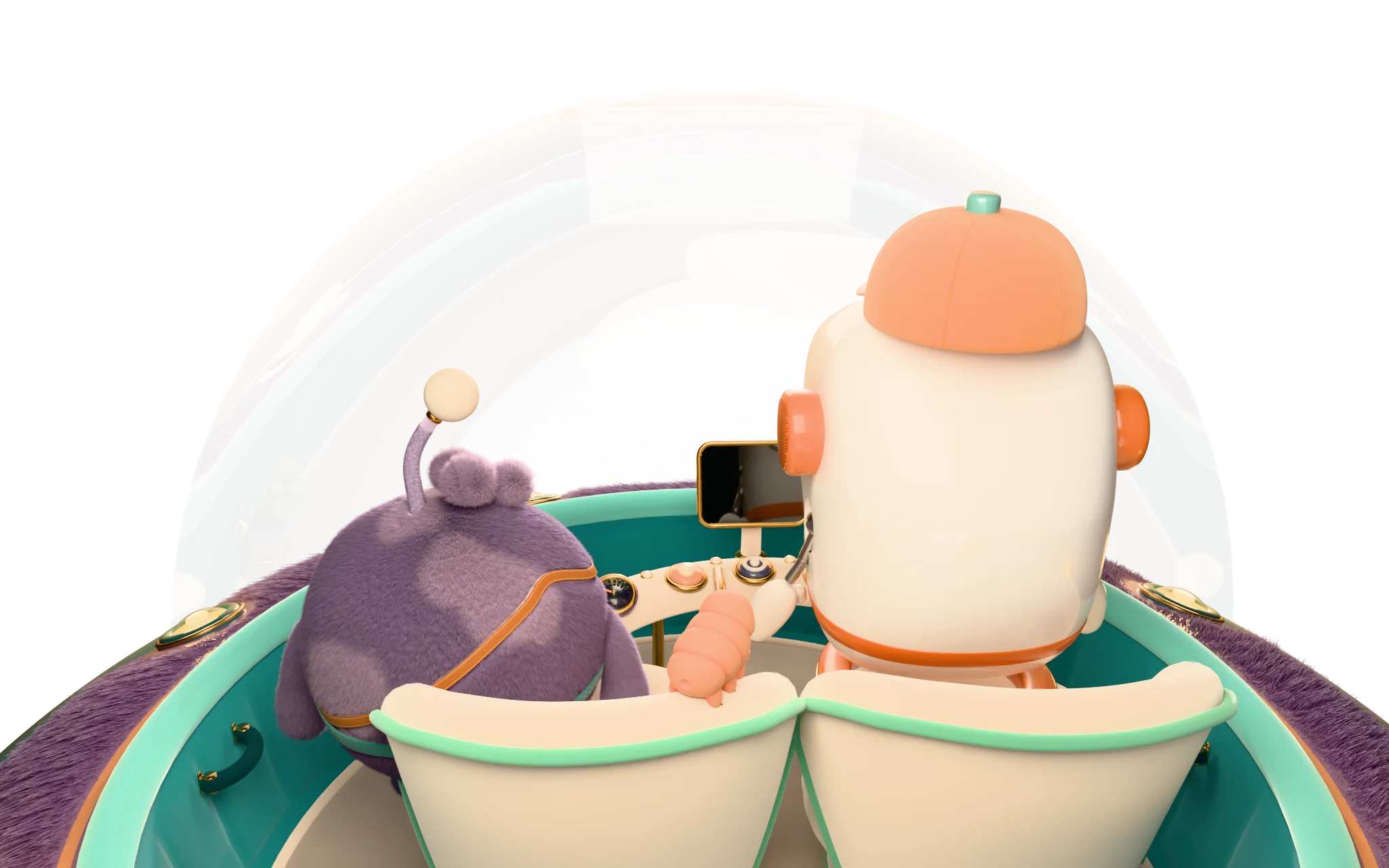
Nubo’s furry little saucer. Every saucer needs a cup, Nubo says. When the engine stops, everything inside floats, snacks included.
The Welcome Station
A small, cosy station in low orbit, about as high up as the real space station. Inside, everything floats: cups have lids, pictures stay up with magnets and Taffi’s moss is sealed in.
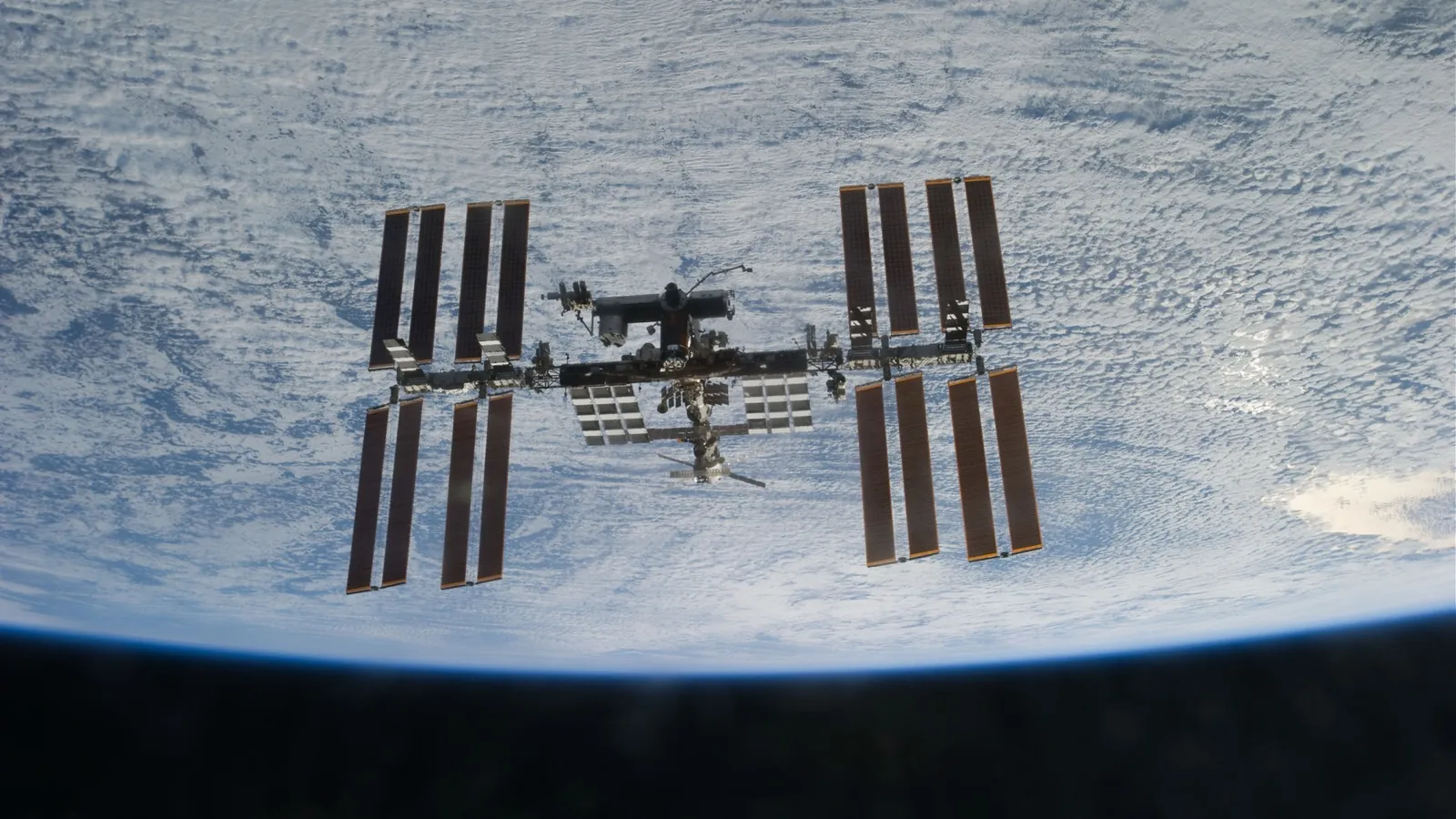
Real photo · NASA · 7 Mar 2011
The neighbour
The International Space Station, the real one, glides past the window now and then. Iko greets it like a colleague: “Have a good orbit, neighbour!” Nubo calls it the Dragonfly and keeps trying to get a photo.
People have lived there every day for more than 25 years.
Look closely
Can you spot the neighbour?
A real photo taken from the ground. The tiny dark shape in front of the Moon is the space station. Tap the picture to look closer.
Season one · 10 × 12 min
Ten episodes, one journey
The trip moves outward from the Sun, from the nearest star to the far away suns, and the trips grow longer. Every episode answers one question and adds one easy extra fact about space. The hardest ideas, such as gravity, are seen several times before they are explained, and every idea comes back in later episodes.
Every episode ends with a question the next one answersEvery idea comes back later
Close to the Sun: the Sun, Mercury, Venus
Home: the Earth, the Moon and the way to space
Mars
The giants and beyond
1
Episode 1 · ready
The Nearest Star
World
The Sun (fly-bys: the space station, Venus, Mercury)
We find out
The Earth spins, so the Sun only seems to move. The Sun is a star, the one closest to us.
Extra fact
Sunlight reaches the Earth in about 8 minutes.
2
Episode 2
The Hot Neighbours
World
Mercury and Venus
We find out
Venus is the hottest, because its thick air holds the heat. Mercury has no air, so its nights get very cold.
Extra fact
Space is silent: sound needs air to travel.
3
Episode 3
Home in Space
World
The Earth: water, air and life
We find out
The Earth has water, air and life. It is small next to the Sun, but just right for us.
Extra fact
The space station goes round the Earth in about an hour and a half.
4
Episode 4
Who Eats the Moon?
World
The Earth and the Moon in motion
We find out
A day is one spin of the Earth, a year is one trip round the Sun. The Moon changes shape as it goes round us.
Extra fact
Footprints on the Moon stay, because there is no wind.
5
Episode 5
Who Can See the Dinosaurs?
World
Gravity, tides and light
We find out
Gravity holds us on the Earth, and the Moon’s pull makes the tides. Light is fast, but it still takes time.
Extra fact
The galaxy NGC 2336 is about 100 million light years away. From a planet there, you would see dinosaurs on the Earth today.
6
Episode 6
Ready for Launch
World
Rockets and astronauts
We find out
A big rocket carries astronauts up, after years of training. The space station is their home in orbit.
Extra fact
A spacesuit gives air and keeps you warm.
7
Episode 7
The Red Planet
World
Mars and the search for life
We find out
Mars is red from rusty dust, and it is very cold. Robots search it for signs of life.
Extra fact
The robots on Mars send pictures back to the Earth.
8
Episode 8
Rocks, Stripes and Rings
World
The asteroid belt, Jupiter and Saturn
We find out
The belt is mostly empty space. Saturn’s rings are countless pieces of ice and rock.
Extra fact
A shooting star is a speck of dust, not a star.
9
Episode 9
Little Pluto and the Comets
World
Uranus, Neptune, Pluto and the comets
We find out
Uranus and Neptune are giants of ice. A comet’s tail points away from the Sun.
Extra fact
Pluto is smaller than our Moon.
10
Episode 10 · season finale
Far Away Suns
World
The stars and the Milky Way
We find out
Every star is a sun, very far away. Many have planets of their own.
Extra fact
The Milky Way is our home galaxy.
2
Season two, ideas
Life on the space station: food, sleep, spacesuits, and how air and water are used again and again.
First stop, up close
The Nearest Star
In the backyard the shade moves. Who moved it? Mila thinks the Sun moved. Iko checks: the Sun did not move, the Earth turned, and Toby turns round himself to see how it looks. The Earth spins all the time, and that gives us day and night. The Sun is a star, the one closest to us.
Then Cup, the little ship of the space tourist Nubo, comes to fetch a space guide and picks Iko. On the way to Nubo’s Welcome Station near the Sun, Iko sees the real space station and a spacewalker on a tether, and dodges an asteroid. Venus comes closer to the Earth than any other planet, and it is the hottest, because its thick air keeps the heat in. Mercury is the closest to the Sun, goes round it in 88 days, and its dark side is cold. Both get a closer look in later episodes. Iko reminds everyone never to look straight at the Sun, not even with sunglasses. At the end children find out that the stars at night are suns too, that they live in galaxies, and that we live inside our own.
Coming soon
The Snack Ball
A 25-second moment on the way to the Moon. Nubo has taught her snack ball to sit. It doesn’t stay.
How children learn
Guess, look, explain
Every episode turns one child’s question into a test the viewer can follow. Nobody lectures. The answer comes out of the story.
01
Guess
Heavy things fall faster!
Nubo guesses first and gets it wrong, the way real children do: most of her guesses are ideas researchers have heard from children.
02
Look
The test happens on screen and the result shows right away. On the Moon the feather and the stone hit the ground at the same moment, without a sound.
03
Explain
Without air, a feather and a stone fall equally fast.
One short sentence a child can repeat, checked against a NASA source.
Two layers in every episode
The youngest take home what they saw
“On the Moon the feather and the stone landed together.”
Older children take home the reason
“At home the air slows the feather down. Without air they fall equally fast.”
The teaching methods
Guess, look, explainNubo guesses, Iko tests, and the picture shows the answer before anyone explains it.
Seen first, explained laterA new thing first turns up in passing during the adventure, and a later episode stops to look at it properly. In episode 1 Cup flies past Mercury and Venus on the way to the Sun, and a later episode explores them. New knowledge always builds on something children have already seen. Teachers call this a spiral.
Wrong ideas said out loudNubo’s guesses are ideas children really have. The episode shows why the wrong idea doesn’t work and puts the right one in its place.
Remembering and going over it againFrom episode 2 on, every episode opens with a “Remember?” question that children can answer before Iko does, and every idea comes back in later episodes, spread out over the season.
Comparisons children can pictureBig numbers become things children know. From episode 2 on, light, Cup and a plane race each other on every trip: light from the Sun takes about 8 minutes, a plane would fly for about 19 years.
Real pictures, clearly markedEvery real photo or video carries a “Real picture” badge with what it shows and when it was taken.
Easy to follow for the youngestOne question per episode and short sentences. The picture and the voice carry the meaning, so nobody needs to read.
Humour and playJokes, Iko taking every saying literally and a home experiment to try with an adult keep learning fun.
Feelings count tooWhen a guess goes wrong, Nubo names the feeling, Taffi shows a way to calm down, and they try again.
In every episode
Nubo’s wrong guess
Tests with results right away
Facts checked against NASA sources
Real NASA pictures or video, with their dates
A postcard home
A home experiment, with an adult
Tomorrow’s question
Built on research into how children learn science. Safety rules always come with their reason, and nobody ever looks straight at the Sun.
Drawn or real?
Real pictures prove it
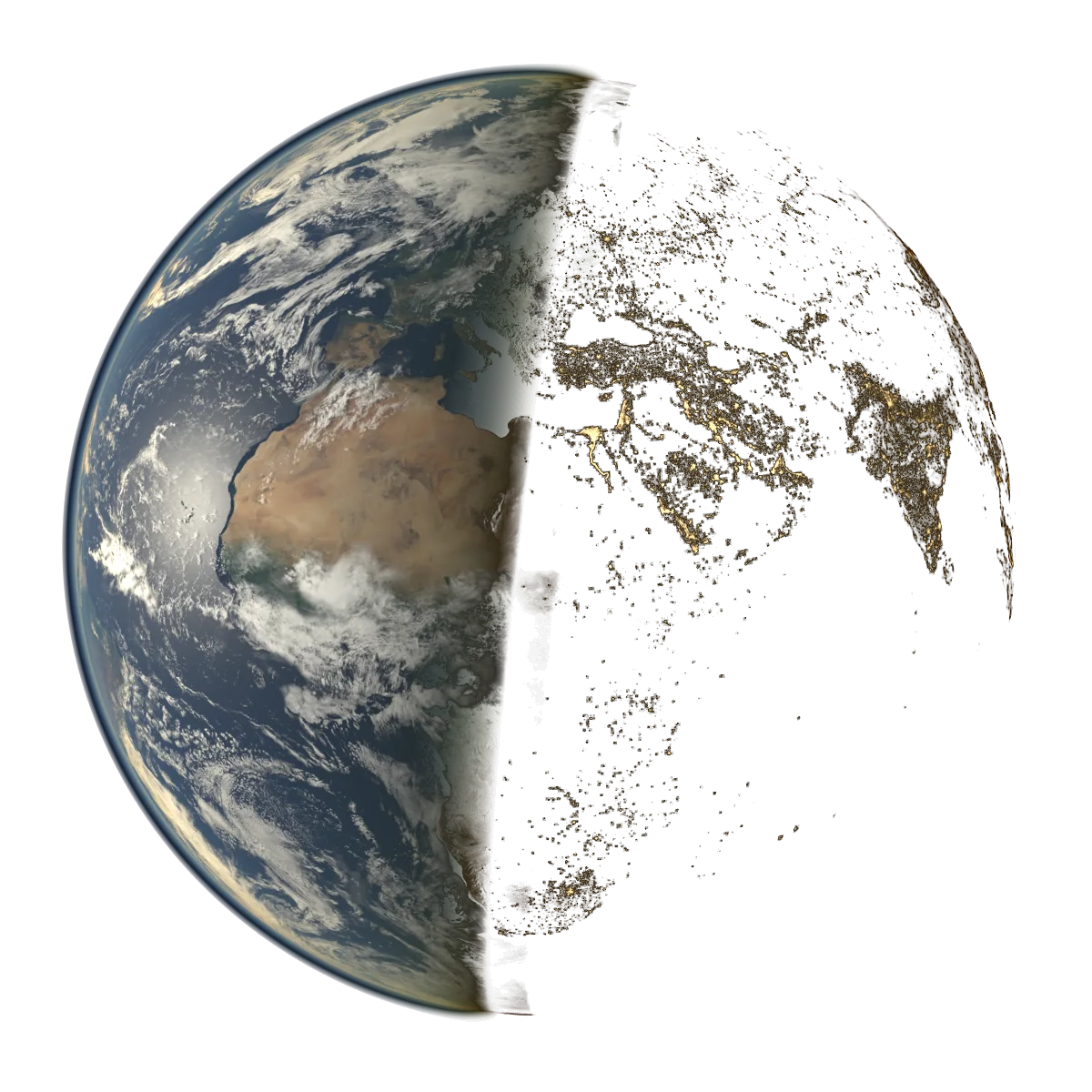
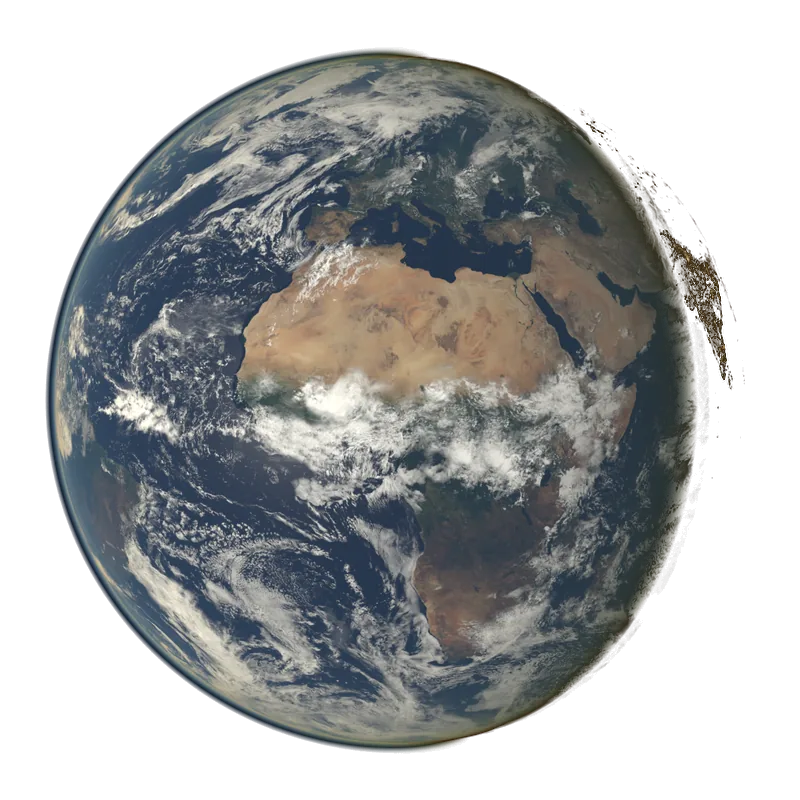
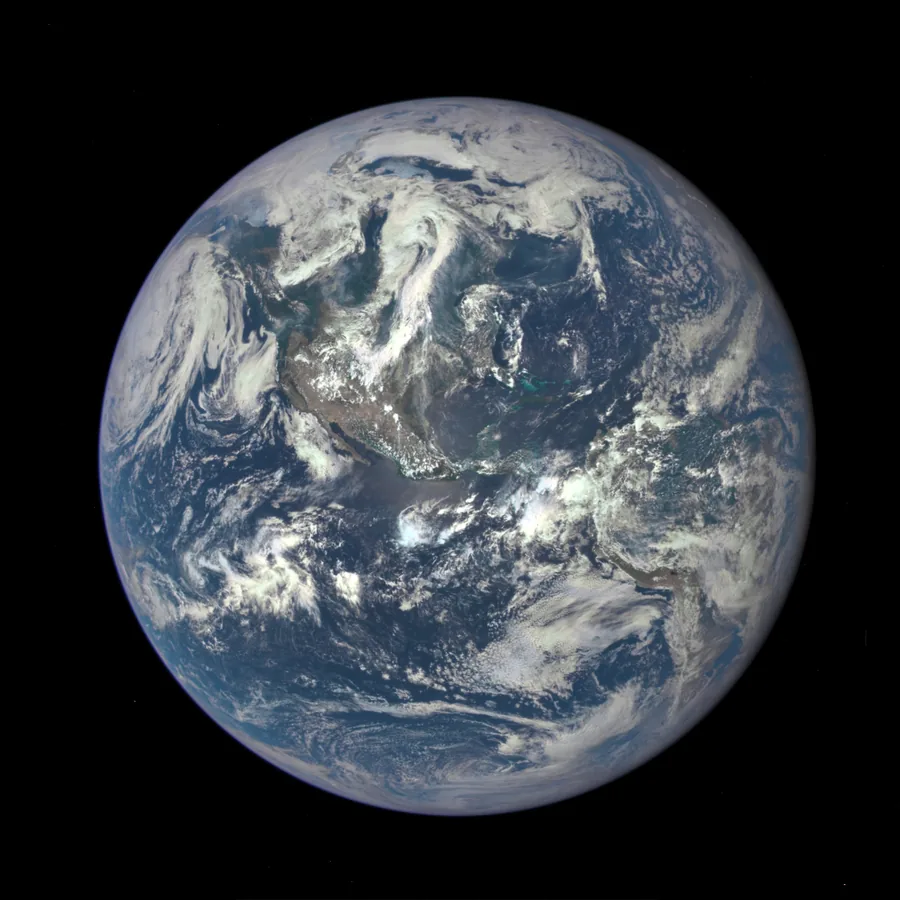
Our Sun, Earth and planets are built in 3D from NASA maps and data. Then the real picture takes over, with a camera badge and the date it was recorded.
A drawing is never passed off as a real picture. Children learn to ask where a picture comes from and when it was taken.
Our 3D Sunbuilt from NASA SDO data
Real footage NASA SDO · 9 May 2016
Our 3D Earthbuilt from NASA maps
Real photo NASA DSCOVR EPIC · 6 July 2015
Format
One show, many languages
12min
Each episode runs 12 minutes. Season one is 10 × 12 min.
5 to 10
Ages 5 to 10, and the adults watching with them.
50episodes
Five seasons of ten episodes. Season one goes from easy to harder, one question each, and every idea comes back later.
New language, new voices
Episode 1 is ready in French (Canada). German, Swiss German, English, American English and French (France) versions are being made. Each language version records Iko and Nubo again. Taffi’s squeaks, the effects and the music are shared.
Neutral for every market
No flags, borders, brands or religious symbols. No letters inside the picture: on-screen text is our own layer, made for each language.
Delivery
1920 × 1080 · 25 fps EBU R128 · −23 LUFS Full mix, M&E and stems Subtitles: SRT, WebVTT, SDH
Companion game
Space Passport, a browser game prototype: children guess, test and collect fact stamps in their passport, with Iko guiding them by voice. No ads, no purchases, no reading needed.
Contact
Get in touch
We are looking for broadcasters, co-producers and funders. Ask for the finished pilot minutes, the scripts and the season plan.