Animated series · ages 5 to 10Animaatiosarja · 5-10-vuotiaille
Nubo&Iko
Fun space adventures where everything is based on facts. Nubo guesses, Iko tests, and every episode has real pictures or video from space.Hauskoja avaruusseikkailuja, joissa kaikki perustuu faktoihin. Nubo arvaa, Iko testaa, ja jokaisessa jaksossa on oikeita kuvia tai videoita avaruudesta.
In productionTuotannossa10 episodes in learning order10 jaksoa oppimisjärjestyksessäFinnish and EnglishSuomi ja englanti
Scroll to fly out of the windowVieritä, niin lennetään ikkunasta ulos
The series openingSarjan alkutunnari
A ride through the Solar System, with real picturesKierros aurinkokunnassa oikeiden kuvien kanssa
Nubo and Iko fly from the real Sun past the Earth, the Moon, Mars, Jupiter and Saturn, and home through the aurora. The Sun, the Earth, the Moon and the planets are real photos and video from NASA, each with the year it was taken.Nubo ja Iko lentävät oikean Auringon luota Maan, Kuun, Marsin, Jupiterin ja Saturnuksen ohi ja revontulten läpi kotiin. Aurinko, Maa, Kuu ja planeetat ovat NASAn oikeita kuvia ja videoita, ja jokaisessa näkyy kuvausvuosi.
The ideaIdea
Every fact is trueJokainen fakta on totta
Nubo & Iko is full of jokes, chases and rescues. Only one thing is made up: their little ship Kuppi gets anywhere fast. Everything they see and learn on the way is real, and Iko always tells how long the trip would really take.Nubo & Iko on täynnä vitsejä, takaa-ajoja ja pelastuksia. Vain yksi asia on keksitty: pieni Kuppi-alus pääsee nopeasti minne vain. Kaikki, mitä matkalla nähdään ja opitaan, on totta, ja Iko kertoo aina, kauanko matka oikeasti kestäisi.
A message takes minutesViesti kulkee minuutteja
Light from the Sun takes about 8 minutes to reach us, and a radio call is no faster. So in the story nobody chats live with someone near the Sun.Auringon valo tulee meille noin 8 minuutissa, eikä radioviesti kulje sitä nopeammin. Siksi tarinassa kukaan ei juttele suorassa yhteydessä Auringon lähellä olevan kanssa.
In the seriesSarjassaIn episode 1, light, a rocket and a plane race to the Sun. Light is there in about 8 minutes. The rocket would need more than half a year, from the summer holidays to Christmas, and the plane about 19 years.Jaksossa 1 valo, raketti ja lentokone kisaavat Aurinkoon. Valo on perillä noin 8 minuutissa. Raketilta menisi yli puoli vuotta, kesälomasta jouluun, ja lentokoneelta noin 19 vuotta.
Space is silentAvaruudessa on hiljaista
Sound needs something to travel through, like air, water or glass. Space is empty, so fireworks outside the window open without a bang.Ääni tarvitsee jotain, mitä pitkin kulkea, kuten ilmaa, vettä tai lasia. Avaruus on tyhjä, joten ikkunan takana ilotulitus aukeaa ilman pamausta.
In the seriesSarjassaIko knew it all along and says a polite “Boom.” for every explosion.Iko tiesi sen jo ja sanoo jokaisen räjähdyksen kohdalla kohteliaasti ”Pum.”
Floating is fallingLeijuminen on putoamista
The station falls toward the Earth all the time, but it also moves sideways so fast that it keeps missing. Everything inside falls with it, so everything floats.Asema putoaa koko ajan kohti Maata, mutta se kiitää samalla sivulle niin kovaa, että se menee aina ohi. Kaikki sen sisällä putoaa mukana, ja siksi kaikki leijuu.
In the seriesSarjassaAt the Welcome Station everyone floats from episode 1. Episode 5 explains why.Tervetuloasemalla leijutaan jaksosta 1 lähtien. Jakso 5 kertoo, miksi.
Without air, a feather falls like a stoneIlman ilmaa höyhen putoaa kuin kivi
At home the air slows the feather down. On the Moon there is hardly any air, so a feather and a stone dropped together land together.Kotona ilma jarruttaa höyhentä. Kuussa ei juuri ole ilmaa, joten yhtä aikaa pudotetut höyhen ja kivi osuvat maahan yhtä aikaa.
In the seriesSarjassaEpisode 4 tests it on the Moon, again and again, with bigger and bigger things.Jakso 4 kokeilee sitä Kuussa yhä uudestaan ja yhä isommilla esineillä.
Down points to the middleAlas on kohti keskustaa
Gravity pulls everything toward the middle of the Earth. That is why people on the other side of the planet don’t fall off.Painovoima vetää kaikkea kohti Maan keskustaa. Siksi maapallon toisella puolella asuvat eivät putoa pois.
In the seriesSarjassaIn episode 5 Nubo finds out that gravity pulls toward the middle of the Earth even up at the station.Jaksossa 5 Nubo huomaa, että painovoima vetää asemallakin kohti Maan keskustaa.
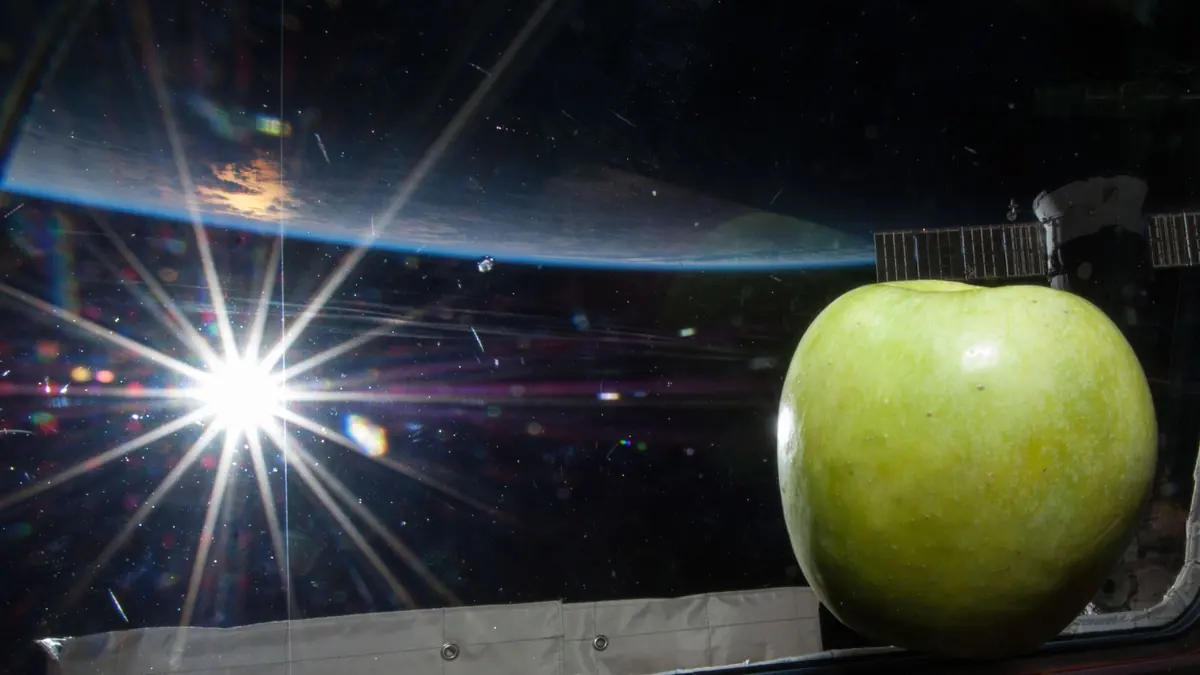
Real photoOikea kuva · NASA · 6 Feb 20146.2.2014
Real pictures carry a dateOikeassa kuvassa on päivämäärä
Every episode has real photos or video from NASA. Each has a small camera badge and the date it was taken, so children learn to tell a drawing from a photograph. In episode 1 the real space station crosses the Sun and films the aurora.Jokaisessa jaksossa on NASAn oikeita kuvia tai videoita. Niissä on pieni kameramerkki ja kuvauspäivä, joten lapsi oppii erottamaan piirroksen ja valokuvan. Jaksossa 1 nähdään oikea avaruusasema: se lipuu Auringon editse ja kuvaa revontulet.
In the pictureKuvassaAn apple floating on the real space station. It falls around the Earth too.Omena leijuu oikealla avaruusasemalla. Sekin putoaa Maan ympäri.
The charactersHahmot
Friends at the Welcome StationYstävät Tervetuloasemalla
Nubo guesses, Iko tests, Taffi squeaks. Their home base is a small station in low orbit, and the real space station floats past the window now and then.Nubo arvaa, Iko testaa ja Taffi piipittää. Heidän kotinsa on pieni asema matalalla kiertoradalla, ja oikea avaruusasema lipuu aina välillä ikkunan ohi.
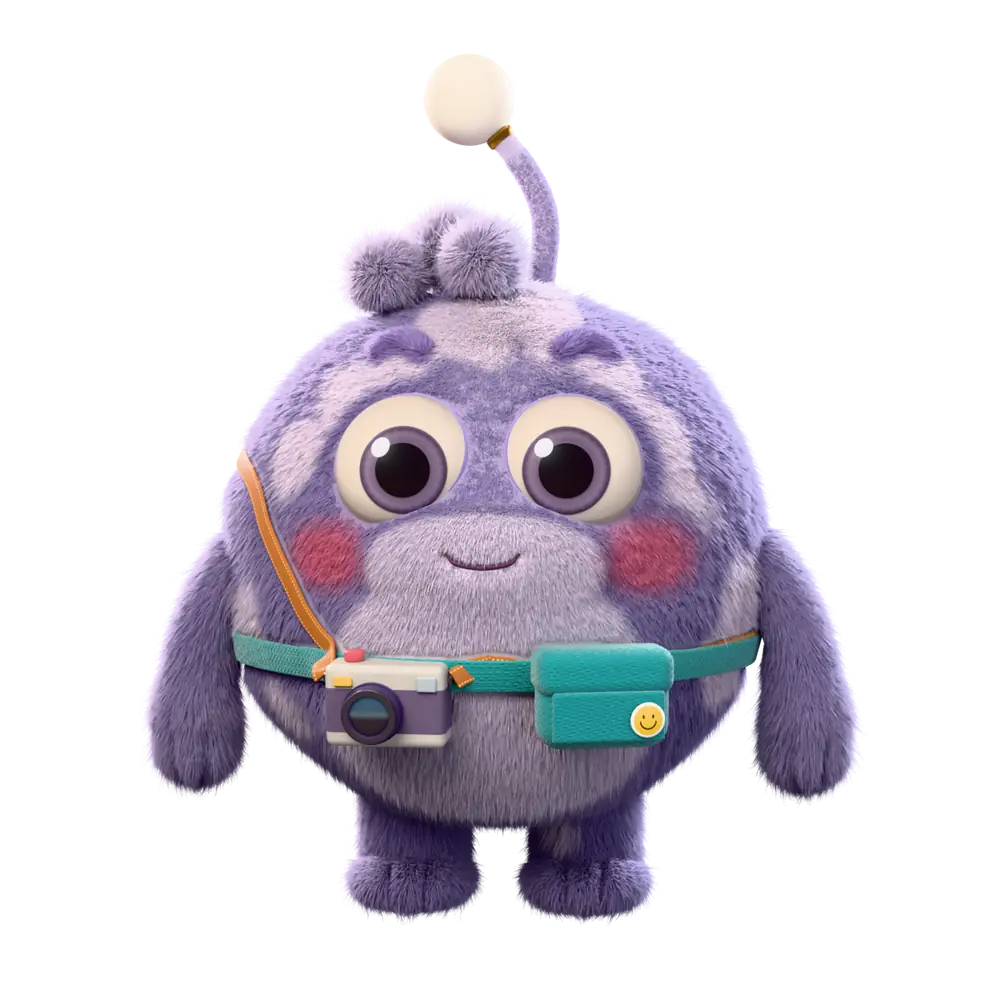
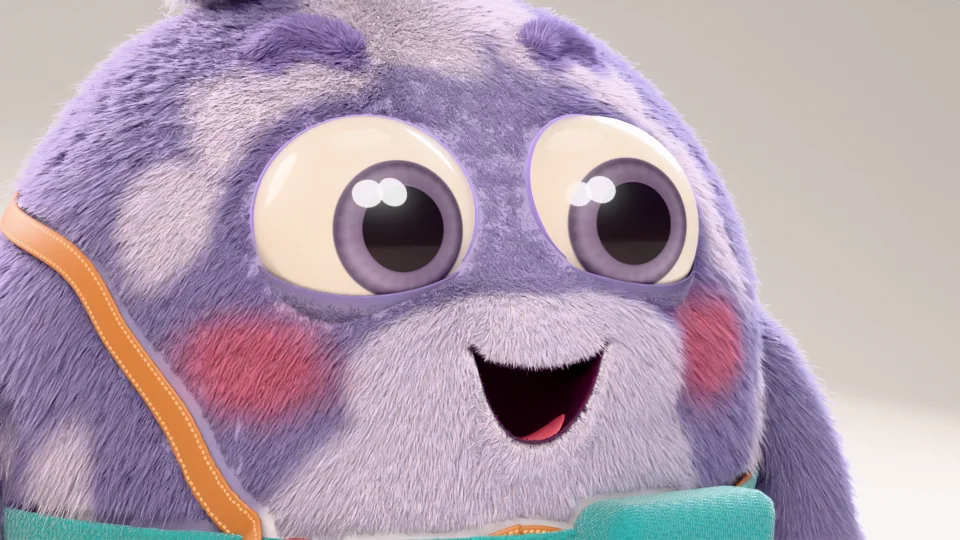
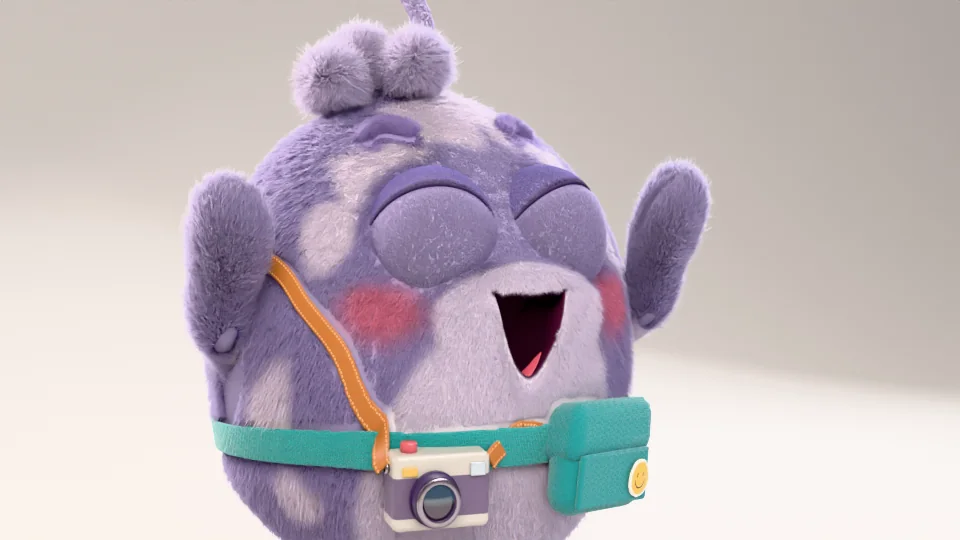
NUBO
Nubo
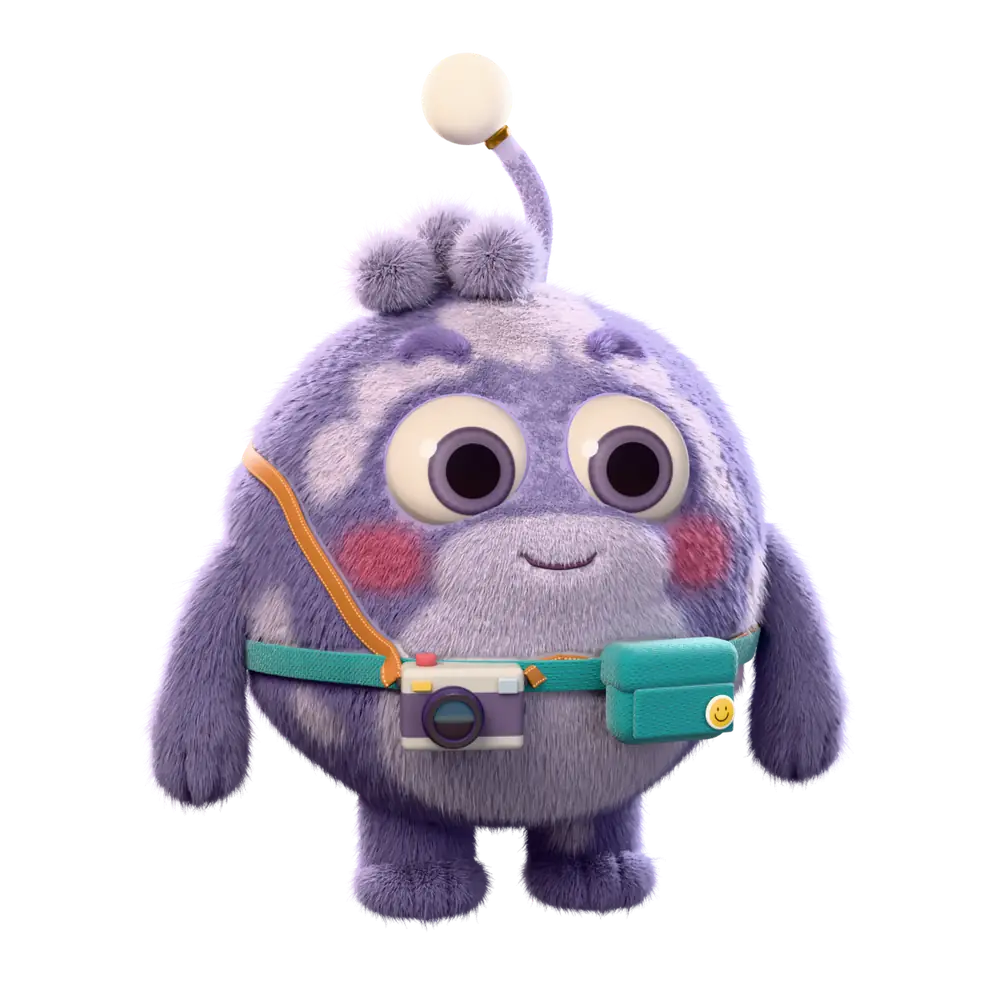
A curious, cloud-soft alien girl from a faraway planet. She travels with her camera and wants a picture of everything for her family at home.Utelias, pilvenpehmeä avaruustyttö kaukaiselta planeetalta. Hän kulkee kameransa kanssa ja haluaa kuvan kaikesta kotiväelle.
She talks, laughs and guesses firstPuhuu, nauraa ja arvaa ensin
She guesses boldly and is often wrong, the same way real children are. So the viewer always keeps up with her.Hän arvaa rohkeasti ja erehtyy usein, samalla tavalla kuin oikeat lapset. Siksi katsoja pysyy aina hänen mukanaan.
When a guess fails, her antenna dims for a moment. Then she shouts: “Again!”Kun arvaus menee pieleen, antenni himmenee hetkeksi. Sitten hän huutaa: ”Uudestaan!”
Antenna lightAntennin valo
Keep scrolling down and she turns aroundJatka alaspäin, niin Nubo kääntyy
0°
Iko
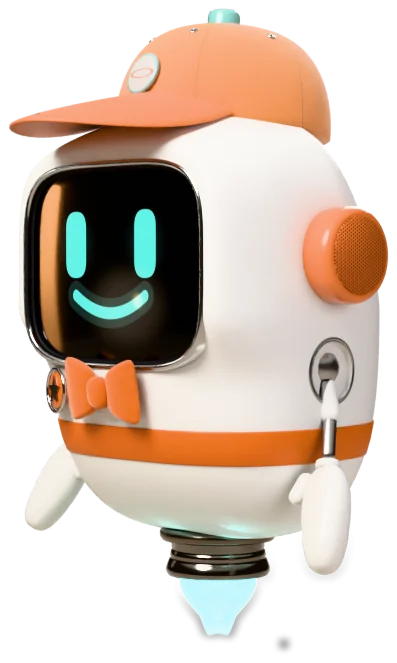
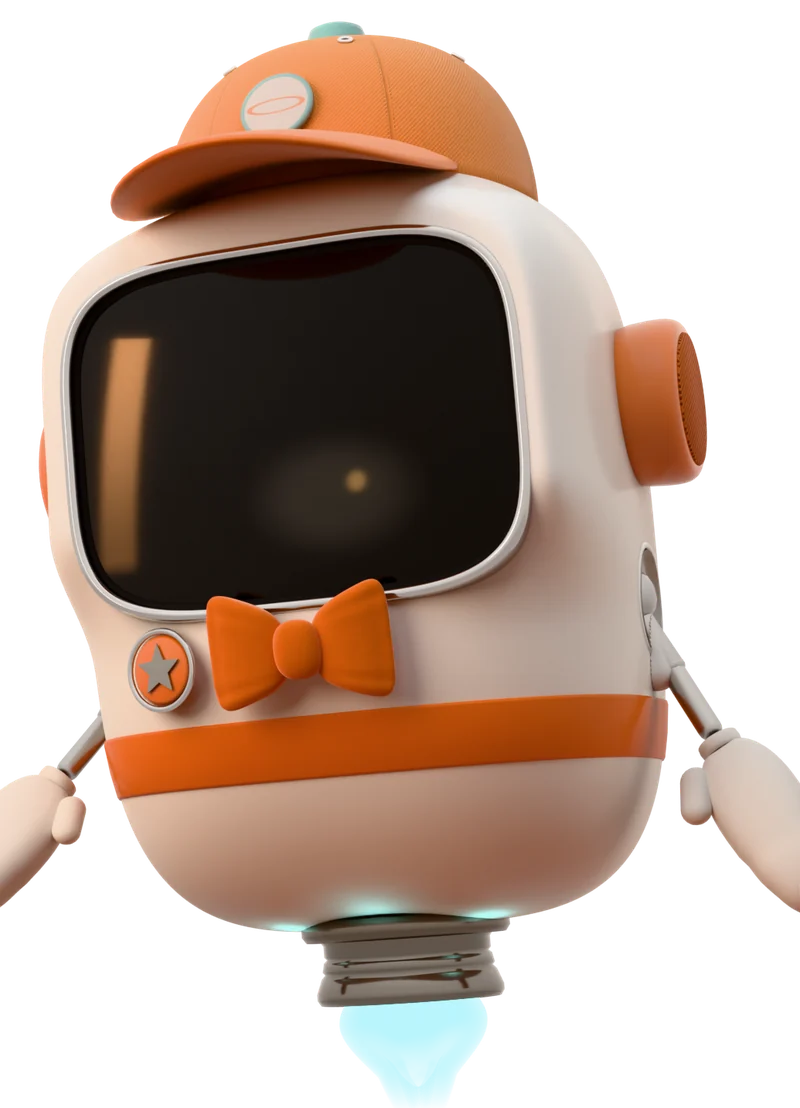
The tour guide robot of the Welcome Station: polite, careful and proud of its job. Iko checks every guess, never with a lecture, always with a test: “Good guess. Let’s test it!”Tervetuloaseman opasrobotti: kohtelias, huolellinen ja ylpeä työstään. Iko tarkistaa jokaisen arvauksen, ei koskaan luennoimalla vaan aina kokeilemalla: ”Hyvä arvaus. Testataan!”
When Iko gets nervous, it polishes something. Its face is a screen of light, and it is the only one who talks to the viewer.Kun Iko jännittää, se kiillottaa jotain. Sen kasvot ovat valoa, ja se on ainoa, joka puhuu katsojalle.
Gender-neutralSukupuolineutraaliSpeaks to the viewerPuhuu katsojalle
Move your pointer. Iko is watching.Liikuta hiirtä, niin Iko seuraa katseellaan.
Taffi
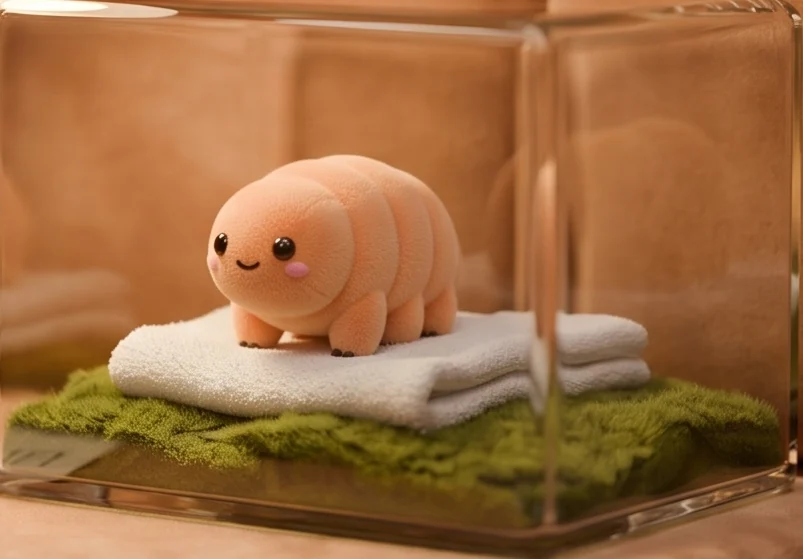
A tardigrade, small and tough like the real ones. Taffi lives in a sealed moss terrarium at the station and comes along in a little travel box.Karhukainen, pieni ja sitkeä kuten oikeat karhukaiset. Taffi asuu aseman suljetussa sammalterraariossa ja tulee mukaan pienessä matkalaatikossa.
Taffi never speaks. A squeak and a look are enough.Taffi ei puhu. Piipitys ja katse riittävät.
When something startles Taffi, it curls into a ball, breathes in and out, and comes back out.Kun jokin säikäyttää Taffin, se kiertyy kerälle, hengittää sisään ja ulos ja tulee taas esiin.
Squeaks onlyVain piipityksiäWorks in every languageToimii kaikilla kielillä
squeakpiip
Kuppi Cup in Englishenglanniksi Cup
Nubo’s furry little saucer. Every saucer needs a cup, Nubo says. When the engine stops, everything inside floats, snacks included.Nubon pörröinen pikkulautanen. Nubon mielestä jokainen lautanen tarvitsee kupin. Kun moottori sammuu, kaikki hytissä leijuu, eväät mukaan lukien.
The Welcome StationTervetuloasema
A small, cosy station in low orbit, about as high up as the real space station. Inside, everything floats: cups have lids, pictures stay up with magnets and Taffi’s moss is sealed in.Pieni, kodikas asema matalalla kiertoradalla, suunnilleen yhtä korkealla kuin oikea avaruusasema. Sisällä kaikki leijuu: kupeissa on kannet, kuvat pysyvät magneeteilla ja Taffin sammal on suljetussa terraariossa.
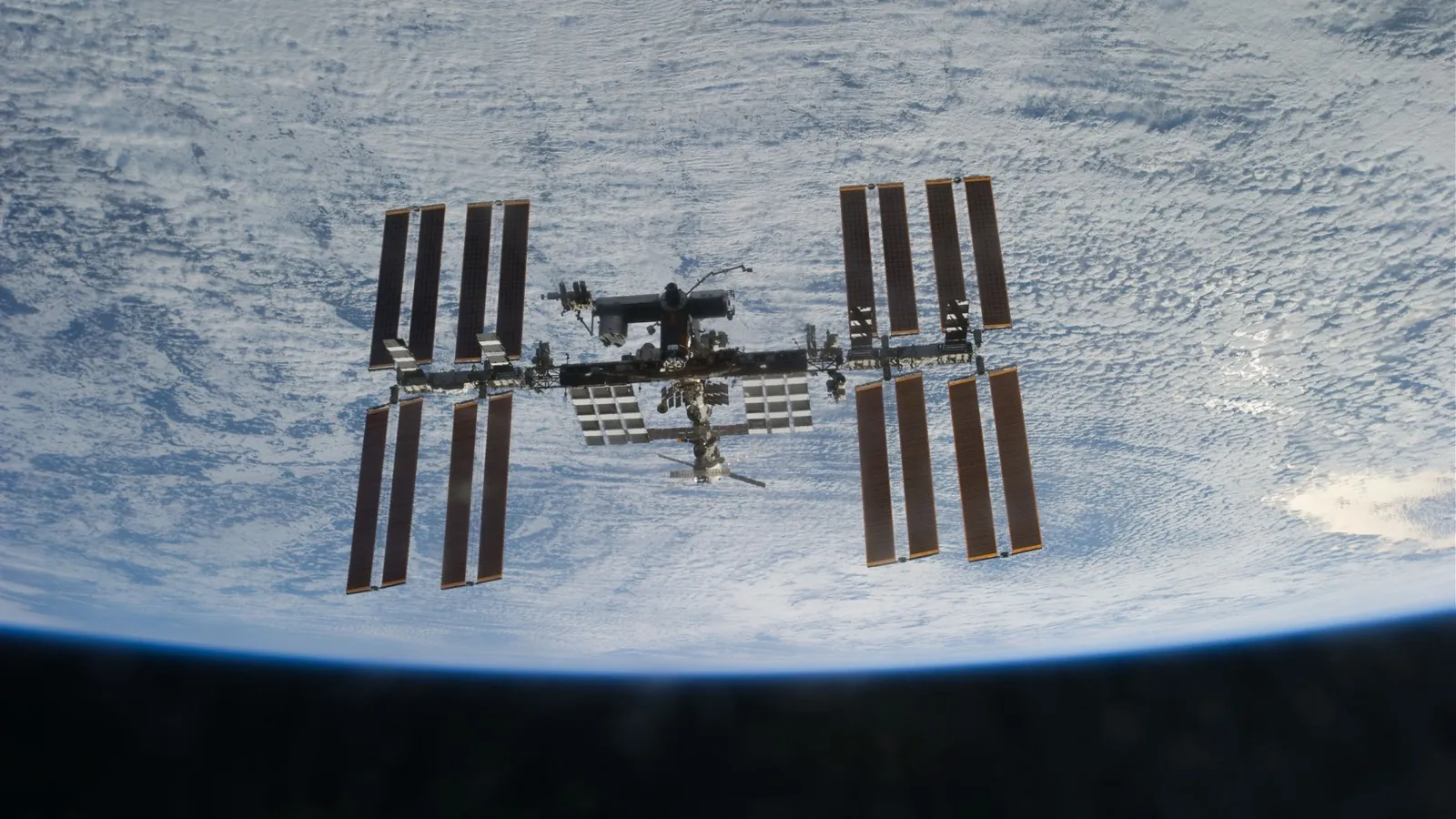
Real photoOikea kuva · NASA · 7 Mar 20117.3.2011
The neighbourNaapuri
The International Space Station, the real one, glides past the window now and then. Iko greets it like a colleague: “Have a good orbit, neighbour!” Nubo calls it the Dragonfly and keeps trying to get a photo.Kansainvälinen avaruusasema, se oikea, lipuu aina välillä ikkunan ohi. Iko tervehtii sitä kuin kollegaa: ”Hyvää kierrosta, naapuri!” Nubo kutsuu sitä Sudenkorennoksi ja yrittää saada siitä kuvan.
People have lived there every day for more than 25 years.Siellä ihmiset ovat asuneet joka päivä yli 25 vuotta.
Look closelyKatso tarkkaan
Can you spot the neighbour?Löydätkö naapurin?
A real photo taken from the ground. The tiny dark shape in front of the Moon is the space station. Tap the picture to look closer.Oikea kuva, otettu maasta. Pieni tumma muoto Kuun edessä on avaruusasema. Napauta kuvaa, niin katsotaan lähempää.
Season oneEnsimmäinen kausi
Ten episodes, one journeyKymmenen jaksoa, yksi matka
Each episode only needs ideas from the ones before it, so nothing comes out of nowhere. Children start with what they can see in the sky, then what they feel in their own bodies, and the two hardest ideas, the seasons and the distance to the stars, come last.Jokainen jakso tarvitsee vain aiempien jaksojen ajatuksia, joten mikään ei tule tyhjästä. Alussa on se, minkä lapsi näkee taivaalla, sitten se, minkä hän tuntee omassa kehossaan, ja kaksi vaikeinta asiaa, vuodenajat ja tähtien etäisyys, tulevat viimeisinä.
Every episode ends with a question the next one answersJokainen jakso päättyy kysymykseen, johon seuraava vastaaWorking titlesTyönimiä
Your own sky: the Sun, night, the MoonOma taivas: Aurinko, yö, Kuu
Your own body: falling, floating, soundOma keho: putoaminen, leijuminen, ääni
Faraway worlds: Mars and the giantsKaukaiset maailmat: Mars ja jättiläiset
Seasons and starsVuodenajat ja tähdet
1
Episode 1 · in productionJakso 1 · tuotannossa
The Nearest StarLähin tähti
QuestionKysymys
What is the Sun, really?Mikä Aurinko oikeasti on?
Nubo guessesNubo arvaa
Stars are tiny sparkles. The Sun is big and yellow, so it can’t be a star.Tähdet ovat pieniä kimalluksia. Aurinko on iso ja keltainen, joten se ei ole mikään tähti.
We find outSelviää
The Sun is a star, our nearest star. The stars at night are suns too, so far away that they look like dots. The Sun’s light reaches us in about 8 minutes.Aurinko on tähti, meitä lähin tähti. Yön tähdet ovat nekin aurinkoja, mutta niin kaukana, että ne näyttävät pisteiltä. Auringon valo tulee meille noin 8 minuutissa.
2
Episode 2Jakso 2
The Sun’s BedroomAuringon makuuhuone
QuestionKysymys
Where does the Sun go at night?Mihin Aurinko menee yöksi?
Nubo guessesNubo arvaa
It goes to sleep behind a mountain.Aurinko menee nukkumaan vuoren taakse.
We find outSelviää
The Earth spins. Night is the side facing away from the Sun.Maa pyörii. Yö on se puoli, joka on poispäin Auringosta.
3
Episode 3Jakso 3
Who Eats the Moon?Kuka syö Kuuta?
QuestionKysymys
Why does the Moon change shape?Miksi Kuu muuttaa muotoaan?
Nubo guessesNubo arvaa
Someone takes a bite out of it every night.Joku haukkaa siitä palan joka yö.
We find outSelviää
The Moon doesn’t shine by itself. The Sun always lights half of it, and we see a different amount of that half.Kuu ei loista itse. Aurinko valaisee siitä aina puolet, ja me näemme siitä eri ison palan.
4
Episode 4Jakso 4
The Feather and the StoneHöyhen ja kivi
QuestionKysymys
Do heavy things fall faster than light ones?Putoaako painava nopeammin kuin kevyt?
Nubo guessesNubo arvaa
Heavy things fall faster.Painava putoaa nopeammin.
We find outSelviää
Without air, heavy and light fall equally fast. Air slows the feather down.Ilman ilmaa painava ja kevyt putoavat yhtä nopeasti. Ilma jarruttaa höyhentä.
5
Episode 5Jakso 5
Floating DayLeijumispäivä
QuestionKysymys
Why does everything float at the station?Miksi asemalla kaikki leijuu?
Nubo guessesNubo arvaa
There is no gravity up here.Täällä ylhäällä ei ole painovoimaa.
We find outSelviää
Floating is falling together. The station falls around the Earth.Leijuminen on putoamista yhdessä. Asema putoaa Maan ympäri.
Boom.Pum.
6
Episode 6Jakso 6
The Silent FireworksHiljainen ilotulitus
QuestionKysymys
Why are there no sounds in space?Miksi avaruudessa ei kuulu ääniä?
Nubo guessesNubo arvaa
The thick window swallowed the bang. Outside you would hear it.Paksu ikkuna söi pamauksen. Ulkona se kuuluu.
We find outSelviää
Sound travels through air, water and glass, but not through empty space. Light does.Ääni kulkee ilmassa, vedessä ja lasissa, mutta ei tyhjässä. Valo kulkee.
7
Episode 7Jakso 7
The Sound of MarsMarsin ääni
QuestionKysymys
Can you hear sounds on Mars?Kuuluuko Marsissa ääniä?
Nubo guessesNubo arvaa
No, because Mars is in space.Ei kuulu, koska Mars on avaruudessa.
We find outSelviää
Mars has thin air and quiet sounds. Its red colour is rust.Marsissa on ohut ilma ja hiljaisia ääniä. Punainen väri on ruostetta.
8
Episode 8Jakso 8
GiantsJättiläiset
QuestionKysymys
Can you land on Jupiter?Voiko Jupiteriin laskeutua?
Nubo guessesNubo arvaa
Yes, every planet has a surface to land on.Voi, jokaisella planeetalla on pinta, jolle laskeutua.
We find outSelviää
Jupiter and Saturn are gas giants with no surface to land on. More than a thousand Earths would fit inside Jupiter. Saturn’s rings are mostly ice, with a little rock.Jupiter ja Saturnus ovat kaasujättiläisiä, eikä niillä ole pintaa, jolle laskeutua. Jupiteriin mahtuisi yli tuhat Maata. Saturnuksen renkaat ovat enimmäkseen jäätä ja vähän kiveä.
9
Episode 9Jakso 9
TiltedKallellaan
QuestionKysymys
Why is it cold in winter?Miksi talvella on kylmä?
Nubo guessesNubo arvaa
In winter the Earth is farther from the Sun.Talvella Maa on kauempana Auringosta.
We find outSelviää
The Earth is tilted. It is closest to the Sun in January.Maa on kallellaan. Maa on lähimpänä Aurinkoa tammikuussa.
10
Episode 10 · season finaleJakso 10 · kauden päätös
Faraway SunsKaukaiset aurinkot
QuestionKysymys
What are the stars, really?Mitä tähdet oikeasti ovat?
Nubo guessesNubo arvaa
Small lamps on the ceiling of the sky.Pieniä lamppuja taivaan katossa.
We find outSelviää
Stars are faraway suns, and their light has travelled for years.Tähdet ovat kaukaisia aurinkoja, ja niiden valo on matkannut vuosia.
2
Season two, ideasToinen kausi, ideoita
Comets, Pluto, the asteroid belt and planets around other stars.Komeetat, Pluto, asteroidivyöhyke ja muiden tähtien planeetat.
First stop, up closeEnsimmäinen pysäkki lähempää
The Nearest StarLähin tähti
Nubo arrives at the Welcome Station in beach gear: she wants to sunbathe right next to the Sun. A star? Not a chance: “Stars are tiny sparkles. The Sun is big and yellow, it’s no star!” Iko has never left the station, but a good guide never lets a guest go alone, so it squeezes into Nubo’s little Cup.Nubo saapuu Tervetuloasemalle rantavarusteissa: hän aikoo ottaa aurinkoa ihan Auringon vieressä. Tähti? Ei todellakaan: ”Tähdet on pieniä kimalluksia. Aurinko on iso ja keltainen, ei se mikään tähti oo!” Iko ei ole koskaan lähtenyt asemalta, mutta hyvä opas ei päästä vierasta yksin, joten se ahtautuu Nubon pieneen Kuppiin.
Iko tries to polish the sunspots away, but they are real. Nubo’s chocolate melts into floating balls. In a real NASA photo their neighbour, the International Space Station, crosses the Sun as a tiny dark shape. Nubo finds out that the Sun is a star after all, our nearest star, and that the stars at night are suns so far away that they look like dots. Back at the station Nubo gets her beach anyway: a patch of sunlight that left the Sun about eight minutes ago. At the end, real video filmed on the space station shows the aurora.Iko yrittää kiillottaa Auringon pilkut pois, mutta ne ovat oikeita. Nubon suklaa sulaa leijuviksi palloiksi. NASAn oikeassa kuvassa naapuri, Kansainvälinen avaruusasema, lipuu pienenä tummana muotona Auringon editse. Nubo saa selville, että Aurinko on sittenkin tähti, meitä lähin tähti, ja että yön tähdet ovat aurinkoja, jotka ovat niin kaukana, että ne näyttävät pisteiltä. Asemalla Nubo saa silti rantansa: valoläikän, joka lähti Auringosta noin kahdeksan minuuttia sitten. Lopuksi avaruusasemalla kuvattu oikea video näyttää revontulet.
Coming soonTulossa
The Snack BallHerkkupallo
A 25-second moment from episode 4, on the way to the Moon. Nubo has taught her snack ball to sit. It doesn’t stay.25 sekunnin hetki jaksosta 4, Kuun matkalta. Nubo on opettanut herkkupallonsa istumaan. Se ei pysy.
How children learnNäin lapsi oppii
Guess, look, explainArvaa, katso, selitä
Every episode turns one child’s question into a test the viewer can follow. Nobody lectures. The answer comes out of the story.Jokainen jakso tekee yhdestä lapsen kysymyksestä kokeen, jota katsoja voi seurata. Kukaan ei luennoi. Vastaus syntyy tarinasta.
01
GuessArvaa
Heavy things fall faster!Painavat putoaa nopeammin!
Nubo guesses first and gets it wrong, the way real children do: most of her guesses are ideas researchers have heard from children.Nubo arvaa ensin ja erehtyy niin kuin oikeat lapset: useimmat hänen arvauksistaan ovat ajatuksia, joita tutkijat ovat kuulleet lapsilta.
02
LookKatso
The test happens on screen and the result shows right away. On the Moon the feather and the stone hit the ground at the same moment, without a sound.Koe tehdään ruudulla, ja tulos näkyy heti. Kuussa höyhen ja kivi osuvat pintaan samalla hetkellä, äänettä.
03
ExplainSelitä
Without air, a feather and a stone fall equally fast.Ilman ilmaa höyhen ja kivi putoavat yhtä nopeasti.
One short sentence a child can repeat. The key fact gets the golden stamp, and every stamped fact has a NASA source.Yksi lyhyt lause, jonka lapsi voi toistaa. Avainfakta saa kultaisen leiman, ja jokaisella leimatulla faktalla on NASA-lähde.
Two layers in every episodeKaksi kerrosta joka jaksossa
The youngest take home what they sawPienimmät vievät kotiin sen, minkä näkivät
“On the Moon the feather and the stone landed together.””Kuussa höyhen ja kivi osuivat maahan yhtä aikaa.”
Older children take home the reasonIsommat vievät kotiin syyn
“At home the air slows the feather down. Without air they fall equally fast.””Kotona ilma jarruttaa höyhentä. Ilman ilmaa ne putoavat yhtä nopeasti.”
In every episodeJoka jaksossa
Nubo’s wrong guessNubon väärä arvaus
Tests with results right awayKokeet, joiden tulos näkyy heti
The golden fact stampKultainen TOSI-leima
Real NASA pictures or video, with their datesNASAn oikeita kuvia tai videoita kuvauspäivineen
A postcard homePostikortti kotiin
A home experiment, with an adultKotikokeilu aikuisen kanssa
Tomorrow’s questionHuomisen kysymys
Built on research into how children learn science. Safety rules always come with their reason, and nobody ever looks straight at the Sun.Perustuu tutkimukseen siitä, miten lapset oppivat luonnontieteitä. Turvaohjeille kerrotaan aina syy, eikä kukaan katso koskaan suoraan Aurinkoon.
Drawn or real?Piirretty vai oikea?
Real pictures prove itOikea kuva todistaa
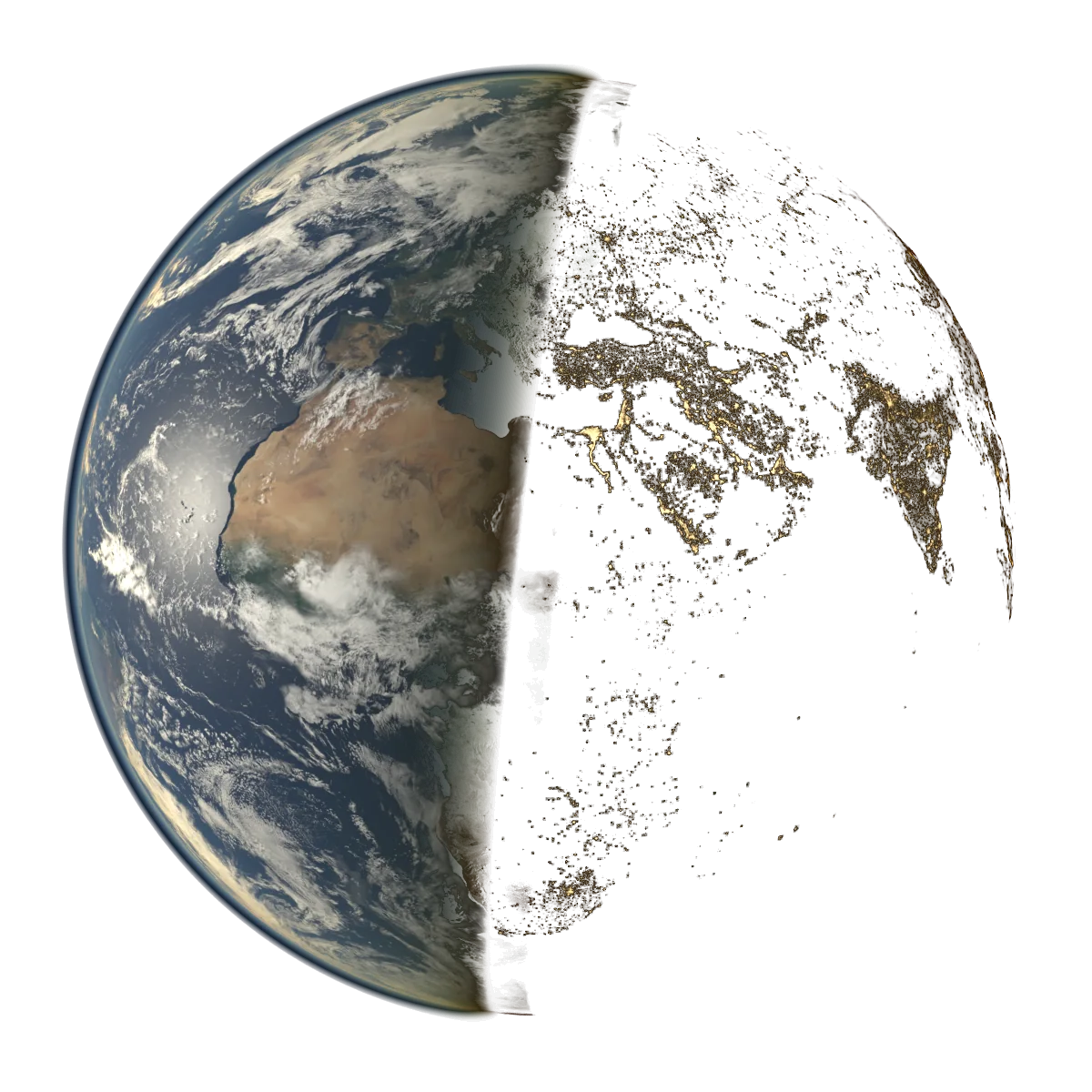
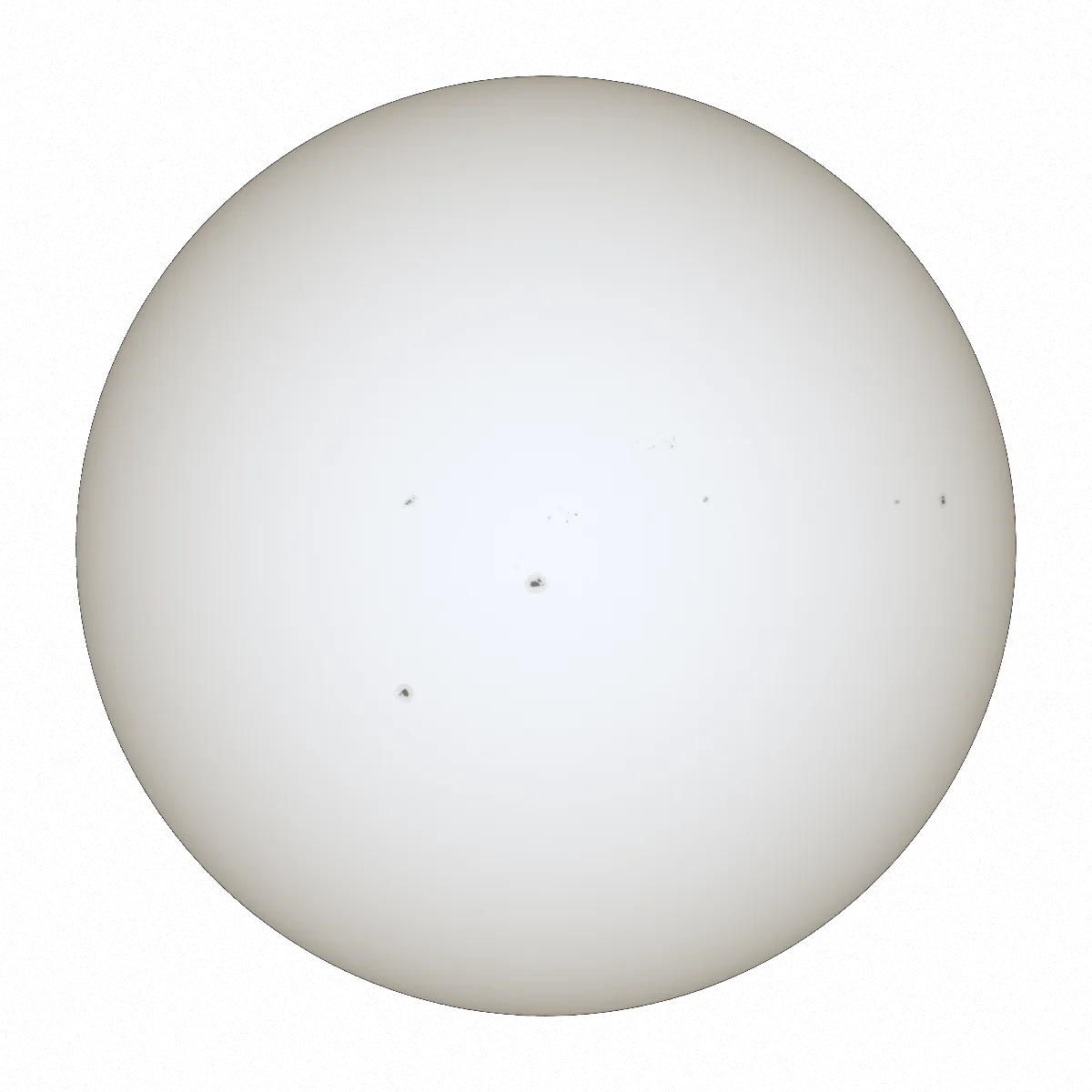
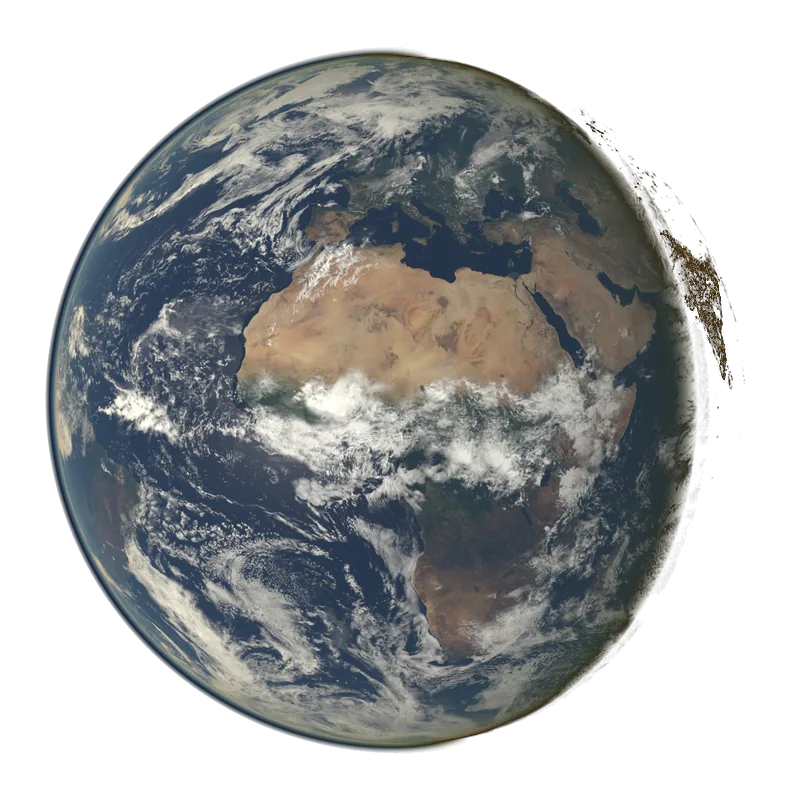
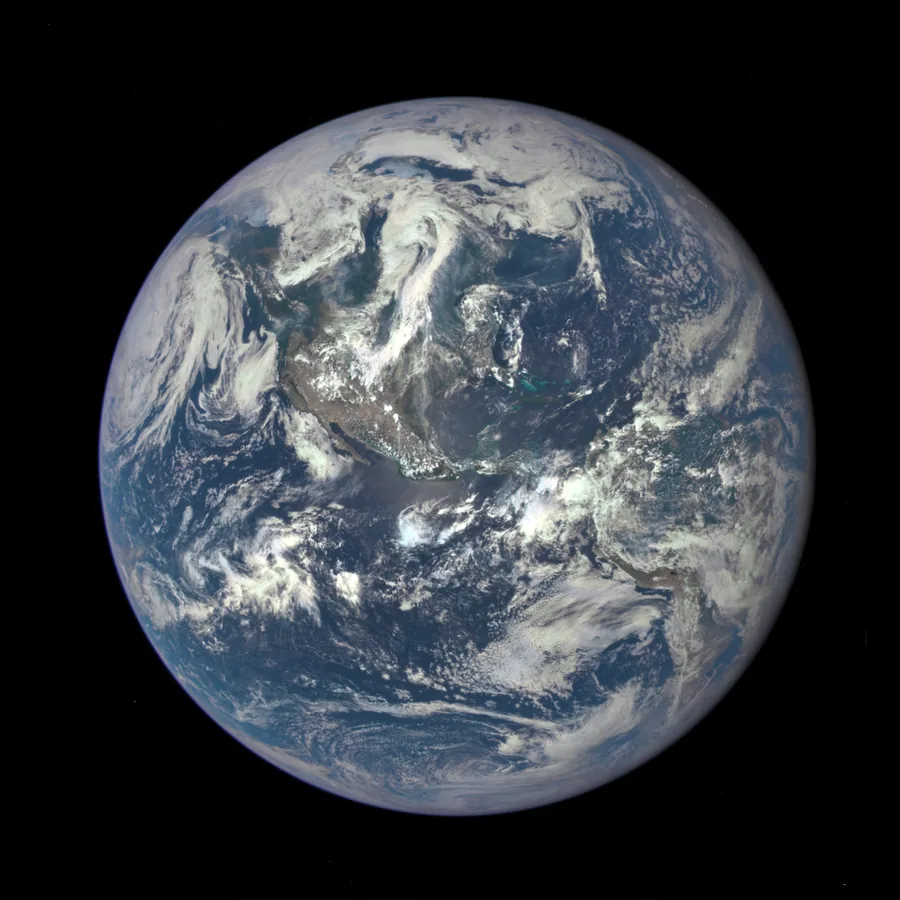
Our Sun, Earth and planets are built in 3D from NASA maps and data. Then the real picture takes over, with a camera badge and the date it was recorded.Oma Aurinkomme, Maa ja planeetat on rakennettu 3D:nä NASAn kartoista ja datasta. Sitten oikea kuva ottaa vallan, kameramerkin ja kuvauspäivän kanssa.
A drawing is never passed off as a real picture. Children learn to tell the two apart, and to ask when a picture was taken.Piirrettyä kuvaa ei koskaan esitetä oikeana. Lapsi oppii erottamaan ne toisistaan ja kysymään, milloin kuva on otettu.
Our 3D SunOma 3D-Aurinkobuilt from NASA SDO datatehty NASA SDO:n datasta
Real footageOikea kuva NASA SDO · 9 May 2016NASA SDO · 9.5.2016
Our 3D EarthOma 3D-Maabuilt from NASA mapstehty NASAn kartoista
Real photoOikea kuva NASA DSCOVR EPIC · 6 July 2015NASA DSCOVR EPIC · 6.7.2015
FormatFormaatti
One show, many languagesYksi sarja, monta kieltä
9 to 119-11minmin
Episodes run about 9 to 11 minutes.Jakso kestää noin yhdeksästä yhteentoista minuuttia.
5 to 105-10
Ages 5 to 10, and the adults watching with them.5-10-vuotiaat ja heidän aikuisensa.
10episodesjaksoa
Season one: ten episodes in learning order, one question each.Ensimmäinen kausi: kymmenen jaksoa oppimisjärjestyksessä, jokaisessa yksi kysymys.
New language, new voicesUusi kieli, uudet äänet
Finnish first, then English and other languages. Each language version records Iko and Nubo again. Taffi’s squeaks, the effects and the music are shared.Ensin suomi, sitten englanti ja muut kielet. Jokaiseen kieliversioon Iko ja Nubo äänitetään uudelleen. Taffin piipitykset, efektit ja musiikki ovat yhteisiä.
Neutral for every marketSopii joka maahan
No flags, borders, brands or religious symbols. No letters inside the picture: on-screen text is our own layer, made for each language.Ei lippuja, rajoja, brändejä eikä uskonnollisia symboleja. Kuvissa ei ole kirjaimia: ruututekstit lisätään erikseen jokaiselle kielelle.
DeliveryToimitus
1920 × 1080 · 25 fps EBU R128 · −23 LUFS Full mix, M&E and stemsTäysi miksaus, M&E ja stemmit Subtitles: SRT, WebVTT, SDHTekstitykset: SRT, WebVTT ja tekstitys kuulovammaisille
Companion gameSelainpeli
Space Passport, a browser game prototype: children guess, test and collect fact stamps in their passport, with Iko guiding them by voice. No ads, no purchases, no reading needed.Avaruuspassi, selainpelin prototyyppi: lapsi arvaa, testaa ja kerää faktaleimoja passiinsa, ja Iko opastaa puheella. Ei mainoksia, ei ostoksia, ei lukutaitoa vaadita.
ContactYhteystiedot
Get in touchOta yhteyttä
We are looking for broadcasters, co-producers and funders. Ask for the finished pilot minutes, the scripts and the season plan.Etsimme kanavia, yhteistuottajia ja rahoittajia. Pyydä pilotin valmiit minuutit, käsikirjoitukset ja kauden suunnitelma.